Biomechanical Deep Dive: Horse Stance, Center of Mass (CoM) & Dynamic Kinetic Coupling in the Modern Forehand
CORE AXIOM: Power in the modern forehand is not generated by muscularly whipping the arm through the ball. It is produced by establishing an expansive Base of Support (BOS) modeled on the martial arts Horse Stance (Ma Bu), anchoring the body's Center of Mass (CoM), synchronizing the dominant leg and arm into a single kinematic unit, allowing a passive gravitational racket drop, and letting the uncoiling torso throw the arm while the arm structurally "covers the racket" to discharge elastic strain energy.
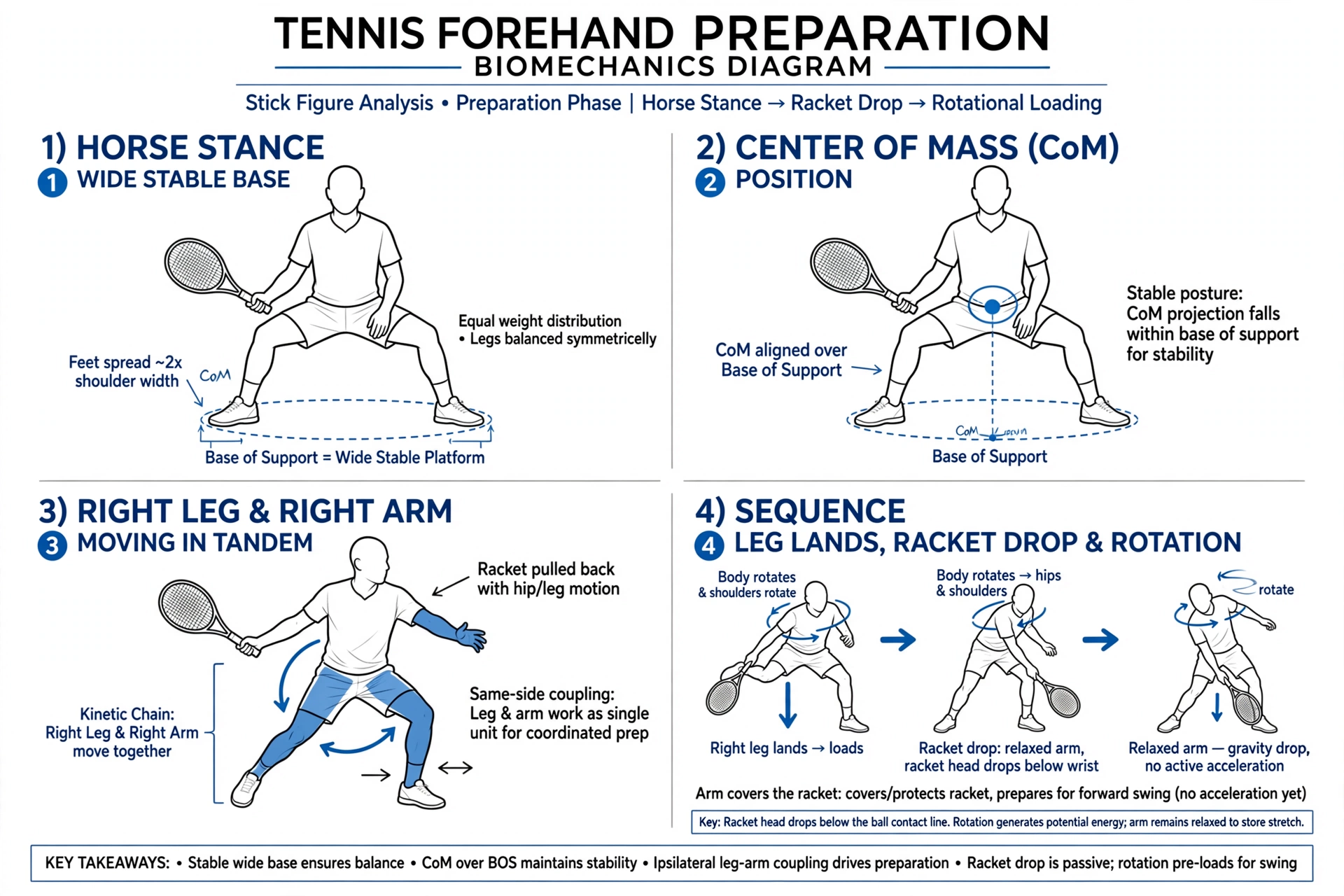
Figure 1: Master Biomechanics Breakdown — Panel 1: Wide Stable Base (~2x shoulder width); Panel 2: CoM aligned symmetrically over Base of Support; Panel 3: Right Leg & Arm moving in tandem (Ipsilateral Coupling); Panel 4: Sequential landing, passive gravitational racket drop, and the covering arm position.
1. Executive Summary & The Problem of Arm Muscling
One of the most persistent and destructive fallacies in amateur and intermediate tennis is the mandate to "pull the racquet through the ball with arm speed" or to "manually drop the racquet head into the slot." In high-performance modern tennis, dynamic stroke production is governed not by isolated muscular exertion of the upper extremities, but by ground-force rooting, pelvic-lumbar uncoiling, and passive inertial transmission.
This research deep dive synthesizes foundational technical notes, photographic field artifacts, and biomechanical diagrams to analyze a unified framework for forehand preparation and kinetic transfer. Drawing a direct physiological parallel between the Martial Arts Horse Stance (Ma Bu / 马步) and the modern semi-open/open tennis stance, this paper formalizes four core kinematic stages:
- The Wide, Symmetrical Base of Support (BOS): Lowering the body’s Center of Mass (CoM) to maximize dynamic stability margins.
- Ipsilateral Kinetic Coupling: Moving the dominant leg (right leg for right-handed players) and hitting arm in tandem as a single, undivided structural unit.
- Sequential Uncoiling & Passive Gravitational Racket Drop: Utilizing ground strike impact to trigger an effortless, gravity-driven drop of the racquet head beneath the contact plane.
- The Counter-Intuitive "Covering Arm" Paradigm: Recognizing that the hitting arm does not actively accelerate the stroke; rather, the uncoiling torso drives the system while the arm structurally "covers" and stabilizes the racquet's trajectory to store elastic strain energy via the Stretch-Shortening Cycle (SSC).
2. Classical Grounding: The Martial Arts Horse Stance (Ma Bu)
2.1 Structural Mechanics of the Horse Stance
In traditional martial arts, Ma Bu (Trung Bình Tấn) is regarded as the universal foundation of external stability and internal power generation. The practitioner stands with feet spread approximately twice shoulder width, toes oriented forward or slightly flared at an angle under $15^\circ-20^\circ$, knees flexed to an angle of $110^\circ-130^\circ$, and the pelvis neutrally tilted.
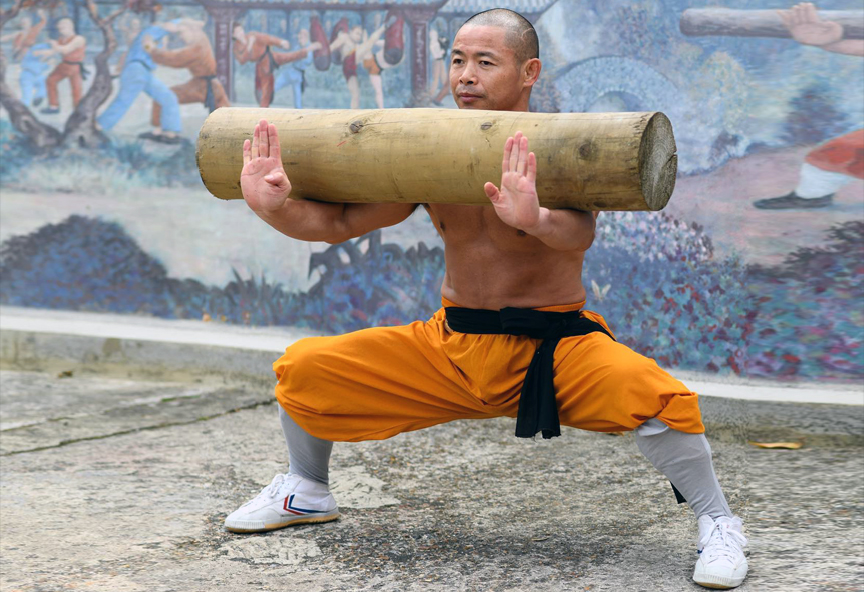
Figure 2: The Classical Shaolin Horse Stance (Ma Bu) — Universal grounding architecture for bilateral equilibrium, low pelvic CoM, and resistance to external tipping torques.
From an anatomical and physical perspective, the Horse Stance optimizes three vital variables:
- Lowers the Center of Mass ($h_{\text{CoM}}$): Decreasing the vertical distance from the ground increases the mechanical resistance to rotational tipping moments ($\tau_{\text{tip}} = F \cdot h_{\text{CoM}}$).
- Maximizes the Base of Support Polygon ($\mathcal{P}_{\text{BOS}}$): The geometric area circumscribed by the lateral borders of the feet defines the region in which the ground projection of the CoM must remain to sustain equilibrium.
- Bilateral Symmetrical Loading: Distributing body weight almost equally between both lower limbs ($50\% / 50\%$ nominal resting state) avoids unilateral joint jamming and primes both hip capsules for instantaneous multidirectional pivot or explosive uncoiling.
3. Physics & Biomechanics of the Center of Mass (CoM) and Base of Support (BOS)
3.1 The Mathematical Condition for Stability
In rigid-body mechanics, static balance requires the vertical ground projection of the body Center of Mass ($\mathbf{r}_{\text{CoM}}$) to fall strictly within the convex hull of the Base of Support ($\mathcal{P}_{\text{BOS}}$):
In dynamic athletic movement, stability is augmented by the Dynamic Margin of Stability ($b_{\text{MOS}}$), defined relative to the Extrapolated Center of Mass ($\mathbf{X}_{\text{CoM}}$):
When an athlete widens their feet to approximately twice shoulder width, $\mathcal{P}_{\text{BOS}}$ expands by more than $250-300\%$ relative to an upright standing posture, while $h_{\text{CoM}}$ drops by $15-25 \text{ cm}$. This exponential expansion of the safety margin allows violent axial trunk rotation without causing lateral falling, spinal tilting, or loss of visual gaze fixity on the incoming ball.
4. Ipsilateral Kinetic Coupling: Right Leg & Right Arm Moving in Tandem
4.1 The "Unit Move" Fallacy vs. Anatomical Reality
Classical coaching often instructed: "Turn your shoulders and take the racket back, then run to the ball and plant your feet." This creates total kinematic disconnection: the upper torso and arm complete their backswing while the lower extremities are still in gait locomotion. When the feet finally plant, the arm has already reached static terminal extension, eliminating all functional elastic pre-stretch.
The modern high-performance model dictates Ipsilateral Same-Side Coupling:
"Right Leg will move in tandem with right arm at almost the same time (like a unit = arm + leg)."
Through the Posterior Functional Line (PFL) and the Spiral Line (SL) (Thomas Myers' Anatomy Trains), stepping laterally with the dominant leg opens the pelvic basin and pre-loads the thoracolumbar fascia. The racket is carried back not by isolated arm retraction, but by the global lateral displacement and coiling of the entire pelvis-leg unit.
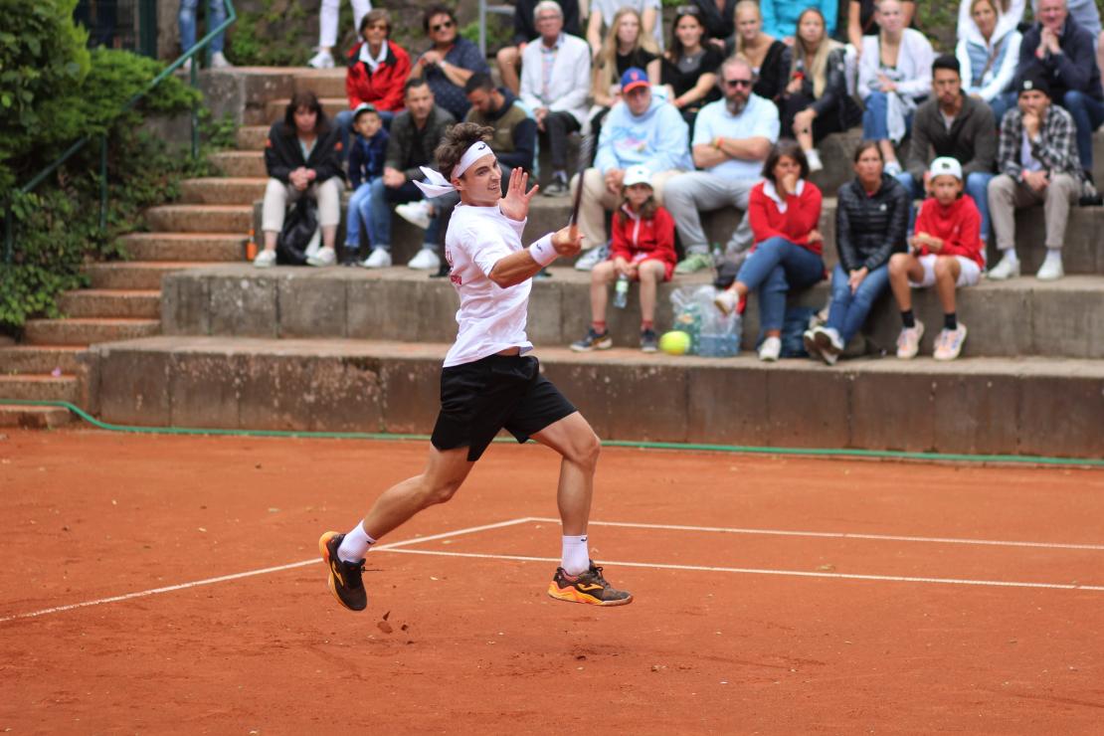
Figure 3: Tournament Pro Dynamic Forehand Loading on Clay — Expansive base of support, deep knee flexion lowering the Center of Mass, and the relaxed hitting arm trailing the pelvic drive.
5. Chronological Kinematics: Foot Strike, Passive Gravitational Drop & Pelvic Uncoiling
The transition from preparation to impact operates through an exacting chronological chain:
- Foot Strike & Landing: Right foot plants firmly on the court surface, spiking Ground Reaction Force ($F_z$) to $1.5-2.5\times$ body weight. Proprioceptive stretch reflexes in the patellar and Achilles tendons store elastic potential energy.
- Passive Gravitational Racket Drop (Fang Song / 放松): Complete muscular relaxation in the biceps, forearm flexors, and anterior deltoid. Gravity ($g$) acts on the mass of the racket head ($300-340\text{ g}$), causing it to plunge freely below the wrist and contact line.
- Kinetic Uncoiling & Pelvic Ground Drive: The rear hip drives forward and internalizes $100-120 \text{ ms}$ before impact, rotating the core and shoulder girdle with high angular velocity.
- Arm "Covers" the Racquet: The arm maintains its structural double-bend geometry, guiding the racket face angle while the Stretch-Shortening Cycle (SSC) ballistically whips the racquet through contact.
6. The Counter-Intuitive Core: "Body Rotates, Right Arm Covers the Racket (Not Accelerate It)"
Why is this axiom universally counter-intuitive to the human brain? Primitive survival motor programs associate striking with active forward arm thrusting. In modern tennis biomechanics, however, an arm-dominated impulse is a catastrophic energy leak.
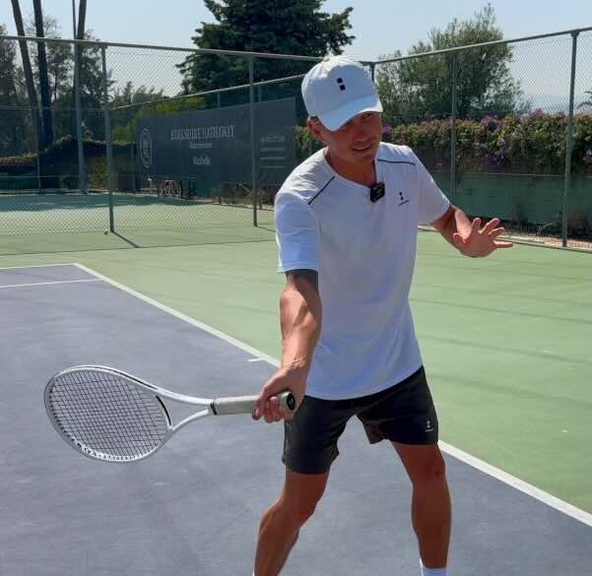
Figure 4: Professional On-Court Coach Demonstration — Structural containment ("Arm Covers the Racket"), loose wrist lag below contact plane, and non-dominant arm balance.
What "Covering the Racket" Truly Means:
- Structural Containment: The right arm does not surge forward independently. It maintains a stable, slightly flexed geometry (elbow flexed at $\sim 90^\circ-120^\circ$, wrist dorsiflexed at $\sim 60^\circ$). The arm acts to "cover" or contain the racquet within the torso's rotational field.
- Guiding the Face Angle: By "covering" the racquet, the arm keeps the racquet face slightly closed to the court surface ($10^\circ-20^\circ$ forward slant) at the bottom of the drop, ensuring a steep low-to-high brush for heavy topspin.
- Passive Conduit for Angular Momentum: The core and hips possess immense rotational inertia ($\tau_{\text{core}} = I_{\text{trunk}} \cdot \alpha_{\text{trunk}}$). The arm acts simply as an elastic tether connecting this central flywheel to the racquet. As the torso decelerates prior to impact, angular velocity transfers outward, slingshotting the racquet head through the ball without active arm pushing.
7. Neuroscience & Proprioception (Jackie Chan CNS Mapping)
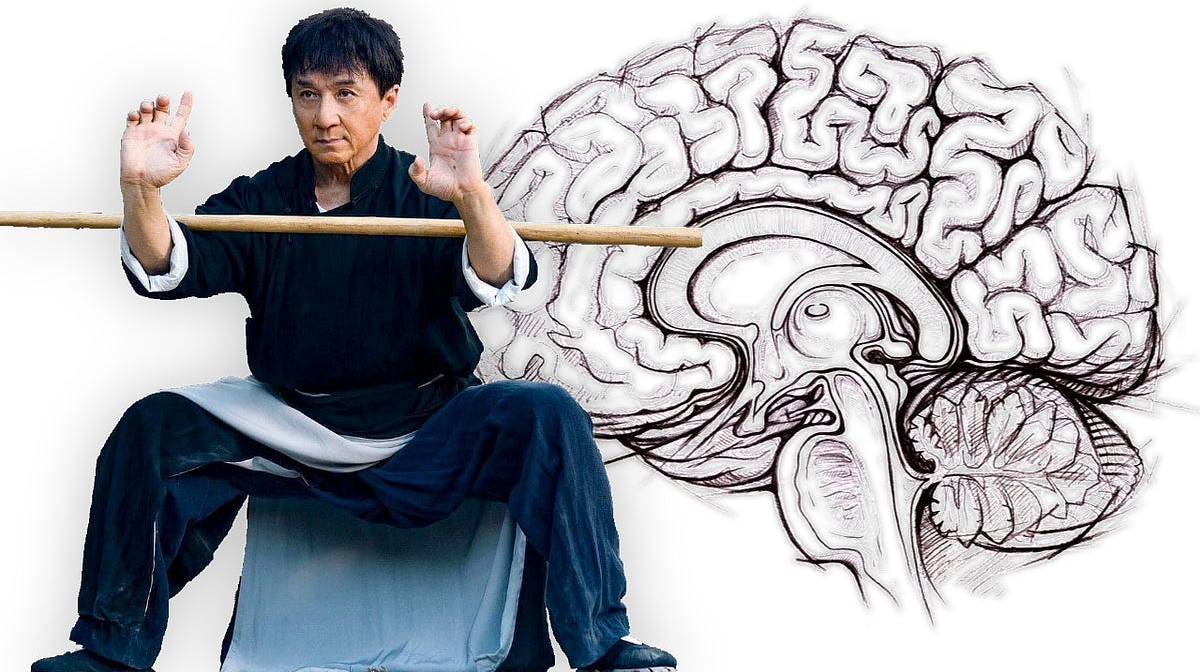
Figure 5: Neuromuscular Architecture of the Horse Stance — Interfacing physical rooting with central nervous system motor maps, subcortical cerebellar automation, and vestibular balance.
When an amateur tries to consciously guide the racquet with their hand, the motor cortex produces high-frequency, fragmented commands, freezing the joints through agonist-antagonist co-contraction. In contrast, cerebellar automation allows the athlete to execute the martial arts state of Fang Song (放松): feet heavy like iron rooted into the earth, hands light like silk covering the racquet.
8. Video Demonstrations & Biomechanical Video Breakdowns
The following video analyses from leading tennis biomechanists and high-speed match archives illustrate these principles in practice:
9. Diagnostic Matrix & Common Fault Correction
| Observable Fault | Biomechanical Root Cause | Neuromuscular Fix & Sensory Cue |
|---|---|---|
| 1. High, Floated Balls Lacking Depth or RPM | CoM shifted backward outside BOS; body tilting or lunging during swing | Deepen Horse Stance; keep knee flexion at $120^\circ$. Cue: "Stay seated in your stance until contact." |
| 2. Arm Tightness, Shoulder Fatigue & Tendonitis | Active arm acceleration; muscling the racquet drop with forearm/biceps | Conscious Fang Song (release); grip pressure drops to 2/10 during foot landing. |
| 3. Shanking off Outer Edge or Inconsistent Contact | Arm disconnecting forward; reaching ahead of body turn | Practice "Arm Covers the Racquet" structure; keep racquet face closed ($20^\circ$) at drop. |
| 4. Loss of Power on Clay or Slick Surfaces | Narrow BOS; failure to plant ipsilateral leg firmly | Widen base to 2x shoulder width; move right foot and racquet in tandem as a single solid unit. |
10. Conclusion
The high-performance modern tennis forehand is an eloquent manifestation of physical laws and ancient movement wisdom. By stepping into a Horse Stance platform with an expansive Base of Support directly beneath the body's Center of Mass, the tennis athlete builds an unshakeable foundation for force production. Coupling the dominant leg and arm into a unified kinematic entity transforms the backswing into an effortless whole-body shift. The subsequent passive gravitational drop and counter-intuitive covering arm posture turn ground reaction forces into effortless, heavy topspin pace.
← Previous: Backswing Upper Body Part 2 | Biomechanics Index | Next: Developing an ATP Forehand →