📚 Tennis Future Lab Monographs (12 works)
Twelve volumes written inside the series and published here in full English translation — mechanics, perception, pressure, and the long argument about how a stroke actually works. Read alone or as one systematic frame.
1 · Tennis Future Lab
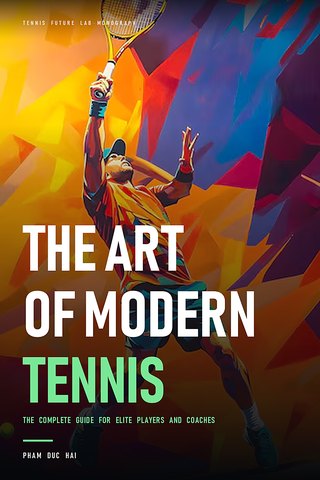
The Art of Modern Tennis
Author: Pham Duc Hai
The opening volume of Tennis Future Lab: a map of the modern stroke and the thinking behind it. A shot begins at the court, travels the kinetic chain, passes through the elastic strings inside the body, and only then reaches the racket.
2 · Tennis Future Lab
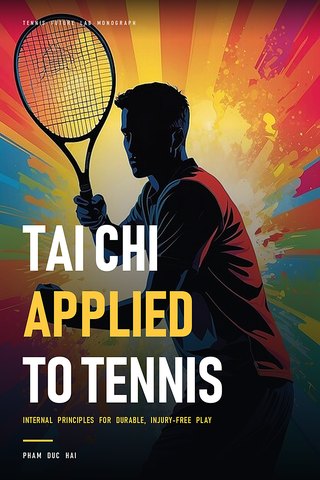
Tai Chi Applied to Tennis
Author: Pham Duc Hai
Bringing Tai Chi into modern tennis: breath, balance, hip rotation and release as the answer to injury and burnout — from serve, backhand and volley to the quiet work of staying loose under load.
3 · Tennis Future Lab
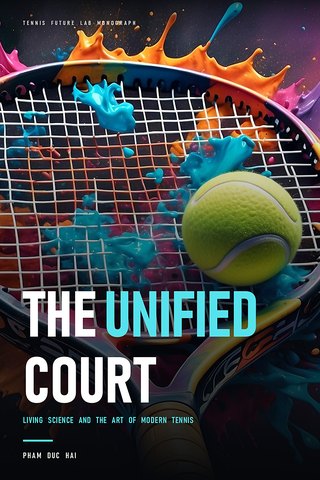
The Unified Court
Author: Pham Duc Hai
From the Unified Court to the movement science of the modern game: biotensegrity chains, vestibular vision, the split-step, and the eight-phase architecture of a stroke.
4 · Tennis Future Lab
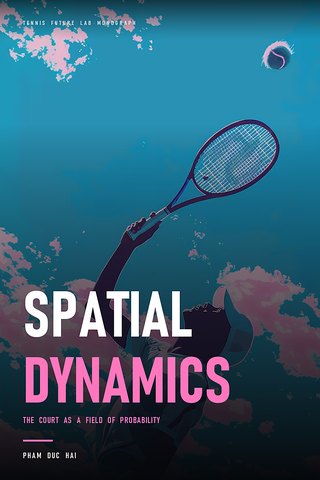
Spatial Dynamics
Author: Pham Duc Hai
The court as a field of probability: angle architecture, the time windows that open and close, recovery geometry along the bisector, and the four spatial variables that decide a point.
5 · Tennis Future Lab
Dynamics in Tennis
Author: Pham Duc Hai
Anatomy of a stroke from the court surface to the night's sleep: ground reaction force and the battery under the feet, fascia and the kinetic chain, the boundary of neural transmission — nineteen layers of one forehand.
6 · Tennis Future Lab
Game Management
Author: Pham Duc Hai
Managing a match as a system: probabilistic thinking and the architecture of a single point, serve and return as two separate systems, patterns inside a tiebreak, and keeping your head when the score is readable.
7 · Tennis Future Lab
Micro-Proprioception
Author: Pham Duc Hai
Closing the circle back to the beginning: rooting into the court, holding the spinal axis, and feeling the racket face before thinking about the shot.
8 · Tennis Future Lab
Pressure Management
Author: Pham Duc Hai
The physiology of pressure and the art of holding rhythm, narrowed to the twenty seconds between points — which is where a match is actually decided.
9 · Tennis Future Lab
From Mechanics to Waves
Author: Pham Duc Hai
Changing the unit of analysis: the body is not a machine but a network of waves. Fascia, tensegrity and wave mechanics, from the theory of transmission to practice on court.
10 · Tennis Future Lab
Elite Sport Psychology
Author: Pham Duc Hai
Four pillars of competitive character and the Big 3 mindset brought into a single frame: what separates the players who win from the players who merely play well.
11 · Tennis Future Lab
The Volley Handbook
Author: Pham Duc Hai
The series closes on the hardest shot to teach, because at the net there is no time left to correct. Principles from Tai Chi through to elite technique.
12 · Tennis Future Lab
Modern Tennis Biomechanics
Author: Pham Duc Hai
Extending the map of materials: from the Dunlop Maxply wooden racket to the Prince Classic oversize and the carbon-graphite frames of the modern tour.
🧠 The Mental Game & Competitive Mind (15 works)
The books that made sport psychology part of tennis: the inner critic, choking, the fear of winning, and the routines that survive a bad call at 4-4 in the third.
Classic · Mental Game
Focused for Tennis
Author: Karl Slaikeu, PhD & Robert Trogolo
A sport-psychology classic built around the Three R's — Release, Review, Reset — the twenty-five seconds between points that decide whether a match is won or lost. Seven mental traps are named and dismantled, with forty-seven diagrams showing exactly where a player's attention belongs.
Classic · Competitive Mind
If I'm the Better Player, Why Can't I Win?
Author: Allen Fox, PhD (UCLA, Top 10 ATP) · Foreword by Richard Evans
Allen Fox's answer to tennis's oldest paradox: the player with the prettier game so often loses. He maps the ego's quiet sabotage, dissects choking as a physiological event rather than a character flaw, and shows how to play the score instead of the shot.
Classic · Mental Game
The Inner Game of Tennis
Author: W. Timothy Gallwey
The book that gave sport a new vocabulary. Gallwey separates Self 1, the running critic, from Self 2, the body that already knows how to hit, then teaches quieting the first so the second can perform. Still the most influential tennis book ever written.
Classic · Competition
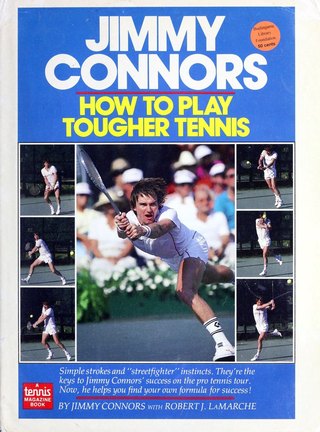
How to Play Tougher Tennis
Author: Jimmy Connors (268 weeks at World No. 1) with Robert J. LaMarche
Connors' own manual from the years he held 109 singles titles: strip the stroke to its essentials, take the two-handed backhand early on the rise, and punish the second serve. A competitor's book about how points are actually won.
Champions · Interviews
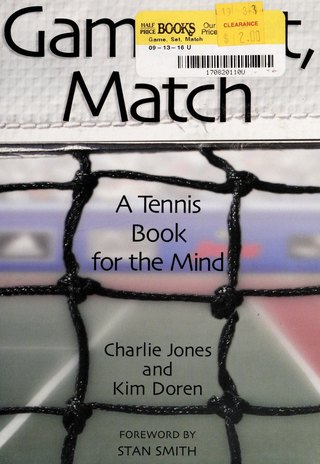
Game, Set, Match
Author: Charlie Jones & Kim Doren
Champions on the inner game. Venus Williams, Chris Evert, Jack Kramer, Rod Laver, Michael Chang, Stan Smith and Todd Martin each describe the part of competition no coach can teach — nerve, the management of nerve, and the will to close.
Classic · Competitive Mind
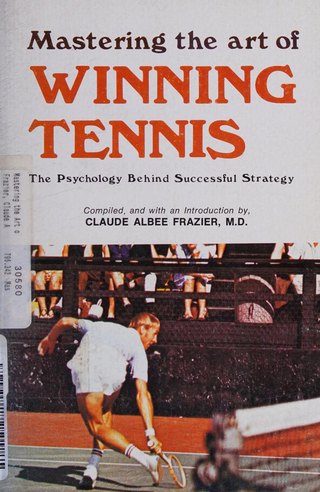
Mastering the Art of Winning Tennis
Author: Claude Albee Frazier, M.D. (ed.) — twelve chapters by twelve specialists
A 1974 anthology: winning with the head, the dark arts of gamesmanship, the mind overriding the body, and the temperaments that separate contenders from champions. A window into how the game was thought about before sport psychology had a name.
Classic · Mind & Body
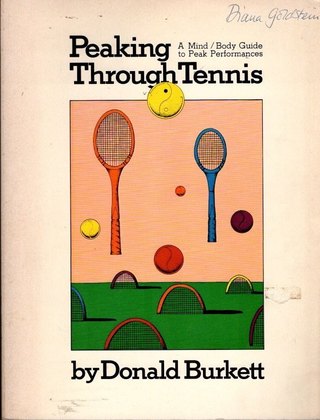
Peaking Through Tennis
Author: Donald Burkett · Illustrated by Suzi Lukeman Armstrong
Burkett's 1979 guide to the unified athlete: Tennis Centering as a way of anchoring attention, and the four games running at once — emotional, social, intellectual, physical. A quiet, humane book from an era that mostly shouted.
Classic · Tactics
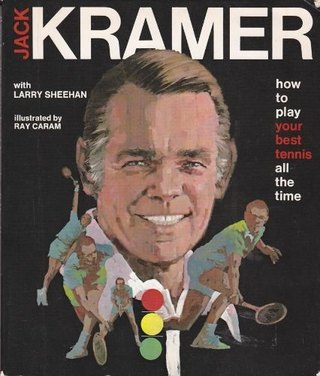
How to Play Your Best Tennis All the Time
Author: Jack Kramer with Larry Sheehan · Illustrated by Ray Caram
Kramer's percentage tennis across thirty-nine chapters: the strike zone standardised, the grip fitted like a glove, the serve built for placement rather than speed. The book that taught a generation to play the odds instead of the highlight.
Classic · Mental Game
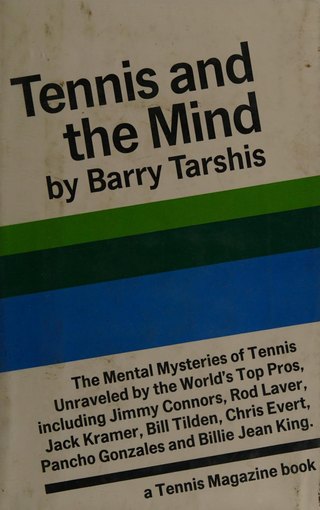
Tennis and the Mind
Author: Barry Tarshis
Sport psychology seen through fifty champions: Evert's narrow focus, the physiology of choking, the fear of winning, and how Ashe broke an opponent's rhythm. An Atheneum / Tennis Magazine book that took the mental game seriously before it was fashionable.
Classic · Mental Game
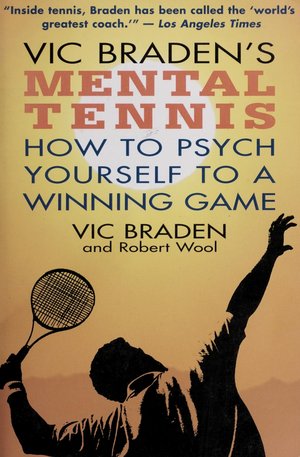
Vic Braden's Mental Tennis
Author: Vic Braden & Robert Wool
Braden, a clinical psychologist as well as a coach, traces the signal from brain to muscle and explains why players repeat the errors they swear they have fixed. Practical, funny, and built on measurement rather than folklore.
Modern · Mental Game
The Mental Emotional Tennis Workbook
Author: Frank Giampaolo
Giampaolo's point is uncomfortable and correct: players spend every hour on technique and then lose to emotions they never trained. A workbook of drills for the emotional side of competition, separating the player who practises well from the one who competes well.
Classic · Technique
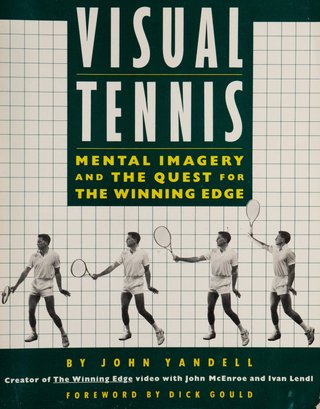
Visual Tennis
Author: John Yandell · Foreword by Dick Gould
Yandell's argument is that language is the wrong channel for learning a stroke. He breaks classical technique into image-based frames the right hemisphere can copy directly, freeing the player from verbal instruction and the self-commentary that follows it.
Modern · Mental Game
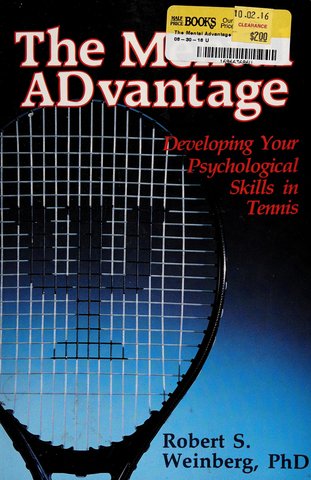
The Mental ADvantage
Author: Robert S. Weinberg, PhD (Miami University)
Six competitive mental skills built on established research: anxiety regulation along the inverted-U, centering, the four dimensions of confidence, and the routines that survive a bad call at 4-4 in the third.
Eastern Thought · Mental Game
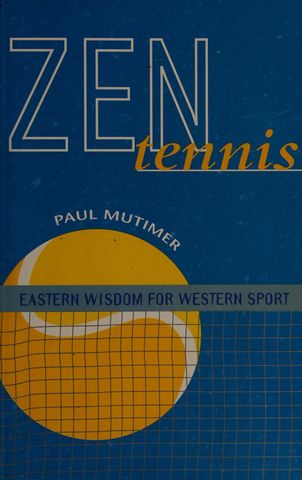
Zen Tennis
Author: Paul Mutimer · Foreword by Evonne Goolagong
Eastern contemplation meeting Western technique. Mutimer takes Evonne Goolagong's 1974 Wimbledon final — the state of being in the zone — as his model, and shows how meditation and breath work make that state repeatable rather than accidental.
Modern · Elite Development
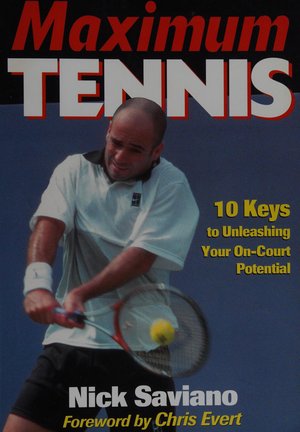
Maximum Tennis
Author: Nick Saviano with ten guest champions and coaches
Thirty-five years of elite coaching plus guest chapters from Jim Courier, Chris Evert, Nick Bollettieri, Patrick McEnroe, Dennis Van der Meer, Brad Gilbert and Dick Gould. What separates players at the top is catalogued rather than mythologised.
🔬 Biomechanics & Sport Science (6 works)
What actually happens when racket meets ball — kinetic chains, the Magnus effect, elastic deformation, and the mathematics of a whip.
Science · Biomechanics
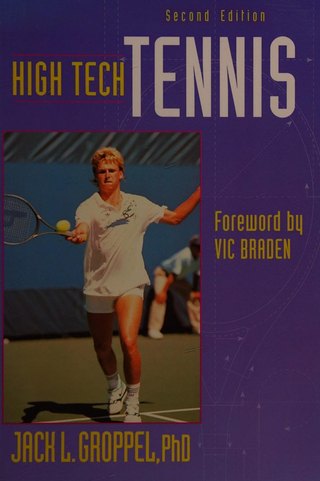
Biomechanics & Sport Science at the Top
Author: Jack L. Groppel, PhD (USTA National Science Committee)
Groppel's biomechanics applied to the court: angular momentum, the heavy ball, one-handed against two-handed backhands, and the Magnus effect behind spin. A USTA science project introduced by Vic Braden.
Science · Anatomy
Tennis Anatomy
Author: E. Paul Roetert, PhD & Mark S. Kovacs, PhD
Human Kinetics' anatomical study of the sport: the rotator cuff, the forearm, core rotation, and the ground-up engine that drives every stroke. Each movement is paired with the muscles producing it and the exercises that protect them.
Science · Biomechanics
The Biomechanics of Tennis
Author: Brad Langevad (ATP Tour advisor) · Foreword by a touring legend
Closed kinetic chains, anatomical axes of rotation and the acceleration path of the racket, analysed frame by frame from video. Langevad builds injury prevention out of mechanics rather than guesswork.
Science · Mathematical Mechanics
Paradigm Shift for Future Tennis
Author: Tijana T. Ivancevic, Bojan Jovanovic et al. (Springer)
A mathematics-of-mechanics study from Springer. Federer at Wimbledon 2009 — a winner-to-error ratio of 2.8 — is decoded through whip-like kinetic chains and the stretch reflex in the serve. Dense, serious, and unlike any other tennis book.
Science · Physics
Tennis: The Science Behind Sports
Author: Carla Mooney (Cengage Learning)
Newton's three laws on a tennis court, the physics of impact and elastic deformation, the nap of the felt, and the Magnus effect. A Cengage title that explains the sport's physics to a reader who has never opened a physics text.
Modern · Data & Technology
Game, Set, AI
Author: Diana Keller
How machine intelligence is reshaping the sport: Hawk-Eye Live reconstructing trajectories in three dimensions to within three millimetres, new performance metrics, and the analytics now sitting in the coaching box. A survey of tennis's data revolution.
🎾 Technique & Strokes (16 works)
From the six actions that govern every shot to a five-hundred-step visual course: grips, stances, swing paths and the contact point.
Modern · Technique
Tennis Strokes & Tactics
Author: John Littleford & Andrew Magrath
A visual course in every phase of every stroke — modern topspin forehand, one- and two-handed backhands, the kick serve, the low skidding slice — photographed in sequence and annotated with the biomechanics behind each frame.
Classic · Technique
Play Winning Tennis with Perfect Fundamentals
Author: Julio Yacub · Illustrated by Henche Silberstein
Four stances — open, semi-open, square, closed — analysed mechanically, with the case for the elliptical loop backswing, the split-step that generates acceleration, the carioca step, and the discipline of the contact point.
Modern · Drills
Tennis Skills & Drills
Author: Joey Rive & Scott C. Williams (former USTA national coaches)
Human Kinetics' drill-based programme: owning the modern forehand, the inside-out forehand, the two-handed backhand and the defensive slice, then the serve-plus-one patterns that follow them into a point.
Modern · Drills
The Tennis Drill Book
Author: Tina Hoskins (Human Kinetics)
Two hundred and forty-five drills with diagrams. Grips from Continental through Semi-Western, the four base stances, depth control, and the volley skills that decide a net exchange. A coach's reference rather than a player's memoir.
Classic · Technique
Topspin to Better Tennis
Author: Eugene Cantin · Photographs by Dave Madison
The book that helped start the topspin revolution: the Magnus effect explained, the low-to-high swing path, and topspin off both wings treated as a system rather than a flourish.
Classic · Footwork
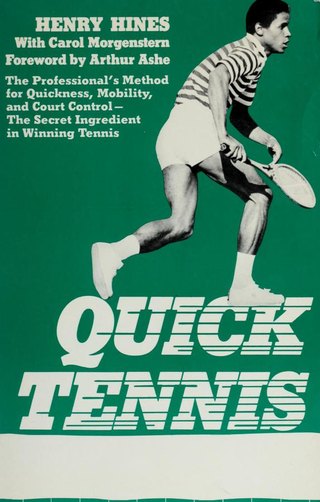
Quick Tennis
Author: Henry Hines with Carol Morgenstern · Foreword by Arthur Ashe
Henry Hines rebuilt the footwork of Arthur Ashe and Roscoe Tanner, and here sets out the movement system that did it: the ready position that stores energy, and the patterns that turn defence into attack in a single step.
Classic · Coaching
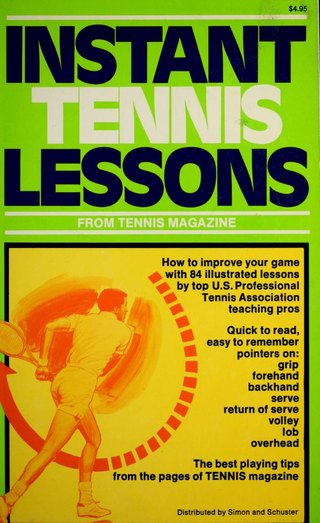
Instant Tennis Lessons
Author: The Editors of Tennis Magazine · Illustrated by Jim McQueen & Ed Vebell
Quick fixes from America's best coaches: the index finger on the grip, the C-shaped loop on the forehand, turning the back and locking the wrist on the backhand, and the mechanics of the serve toss.
Beginner · Course
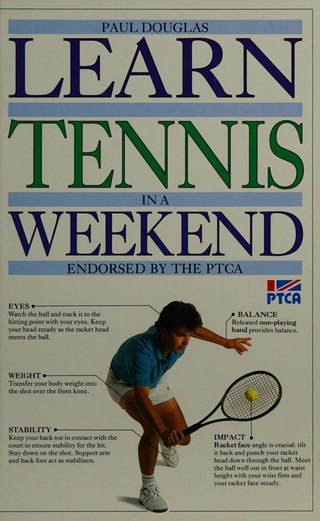
Learn Tennis in a Weekend
Author: Paul Douglas · Photographs by Matthew Ward (Dorling Kindersley)
Dorling Kindersley's forty-eight-hour course: Friday-night preparation, groundstrokes and serve on Saturday, the net game and match play on Sunday. Photographed step by step, and built for the complete beginner.
Classic · Anthology
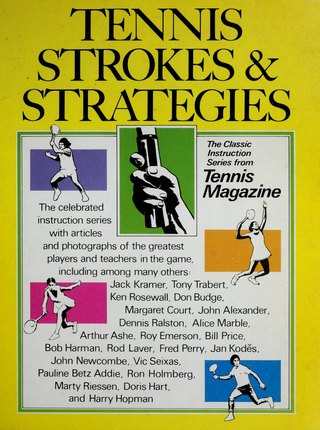
Tennis Strokes and Strategies
Author: The Editors of Tennis Magazine (Simon & Schuster / Fireside)
An anthology of instruction from the greatest names in the game: Kramer's power forehand, backhand lessons from Don Budge and Ken Rosewall, Ashe's cannonball, and the twist serve. The best of a magazine at its peak.
Classic · Self-Taught
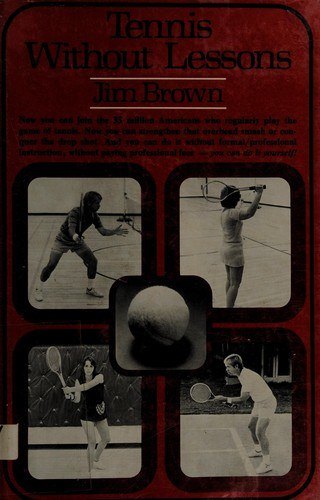
Tennis Without Lessons
Author: Jim Brown, PhD (McNeese State University)
Brown's case for unlearning: the natural stroke recovered through the throwing motion, high-percentage court geometry, and reading an opponent's intention before the ball leaves the strings. Written for the club player who never had a coach.
Classic · Fault Diagnosis
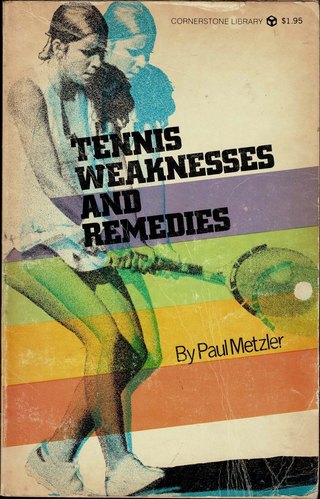
Tennis Weaknesses & Remedies
Author: Paul Metzler
A diagnostic manual. Metzler works through four forehand grips and wrist stability, the fear that freezes a backhand, and the mechanics of the shots that break down under pressure — then prescribes the remedy for each.
Modern · Instruction
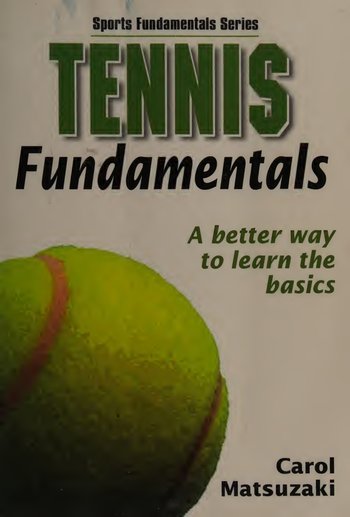
Tennis Fundamentals
Author: Carol Matsuzaki (Human Kinetics)
Human Kinetics' step-by-step pedagogy, from the bevels of the grip through Eastern, Semi-Western and Continental, to movement patterns and the progression that builds a rally. Written by a college head coach.
Classic · Technique
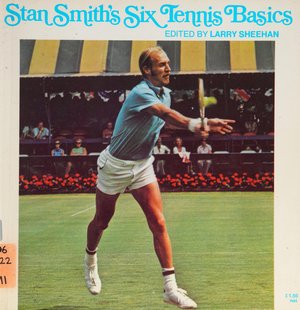
Stan Smith's Six Tennis Basics
Author: Stan Smith & Larry Sheehan
Smith reduces the game to six actions that govern every shot: relaxing on court, the ready position, opening the racket back, watching the ball, the contact point, and the finish. A Wimbledon and US Open champion, distilled.
Modern · Instruction
Tennis: Steps to Success
Author: Jim Brown, PhD (Human Kinetics)
Human Kinetics' most widely adopted instructional text: an eleven-step progression through groundstrokes, serve, volley and half-volley, each step carrying its own success criteria and its own fault corrections.
Classic · Biomechanics
Vic Braden's Tennis for the Future
Author: Vic Braden & Bill Bruns
The book that changed how tennis was taught. Braden and a team of physicists demonstrated the superiority of the loop swing — stored angular acceleration — over the flat, linear hit, and made slow-motion film the coach's instrument.
Modern · Methodology
Play Better Tennis in Two Hours
Author: Oscar Wegner (Modern Tennis Methodology)
Wegner dismantles the classic dogmas — step into the ball, hit flat through the centre — and replaces them with the method his students carried to the tour. Two hours, he argues, is enough to begin playing the modern game.
♟️ Tactics & Strategy (8 works)
Percentage tennis, court geometry and the arithmetic of the cross-court. Playing the odds rather than the highlight.
Modern · Tactics
Tennis Beyond Big Shots
Author: Greg Moran (PTR)
Tactics and temperament with a sense of humour: simplify the stroke, retire the lazy feet, defuse the big server, and win with the five shots you can actually rely on. Written for the player who competes on Saturdays.
Modern · Competition
Climbing the NTRP Ladder
Author: Brett C. Schwartz & Chris A. Dazet
A tournament player's manual organised by NTRP level, 2.5 to 5.0 and beyond: percentage tennis, the points that matter at 30-30 and deuce, break points, and how to neutralise an opponent's strength instead of admiring it.
Classic · Strategy
Pattern Play Tennis
Author: R. Spencer Brent · Illustrated by George Janes
Tennis as geometry and statistics. Brent replaces improvised shot-making with the geometric funnel that constrains an opponent's reply, the approach down the line that closes the angle, and the sequences that build a point.
Modern · Instruction
Serious Tennis
Author: Scott C. Williams (Human Kinetics)
Fourteen chapters built on the SMARTS movement system — See, Move, Adjust, Rotate, Transfer, Swing — applied to the serve, the return and the transition game. A structured programme for the player who wants a plan.
Coaching · Official Curriculum
Tennis Course
Author: Peter Scholl & Richard Schönborn (German Tennis Federation, DTB)
The German Tennis Federation's official coaching curriculum: functional movement analysis, the anchor leg in biomechanics, and the dynamics of ball–racket interaction. Barron's English-language edition of a national syllabus.
Classic · Biomechanics
Tennis 2000
Author: Vic Braden & Bill Bruns (Little, Brown)
Braden's later synthesis: the classic misconceptions named and corrected, the Magnus science of spin, the loop swing, wrist locking at impact, and the geometry that makes a shot safe rather than merely impressive.
Classic · Strategy
Tennis Tactics
Author: William F. Talbert & Bruce S. Old · Foreword by Arthur Ashe
A systematic treatment of strategy for both singles and doubles, with all ninety-three tactical diagrams and six statistical tables reproduced in full. Ashe called it the standard work, and it has not been displaced.
Classic · Strategy
Think to Win
Author: Allen Fox, PhD (NCAA champion, Davis Cup)
Court geometry and competitive psychology from a UCLA PhD who played Davis Cup. Fox computes the bisector of the angle of play, the safety of the cross-court, and why the brave shot is usually the disciplined one.
👥 Doubles (13 works)
The other game: formations, poaching, the alley as a weapon, and the understanding two players have to build over years of standing on the same side.
Classic · Doubles
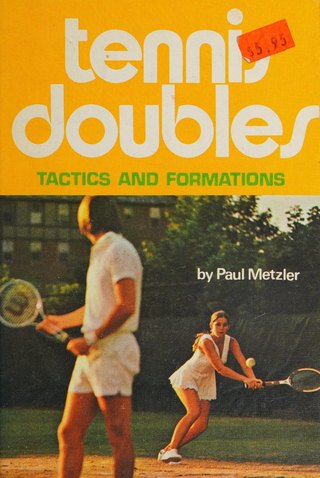
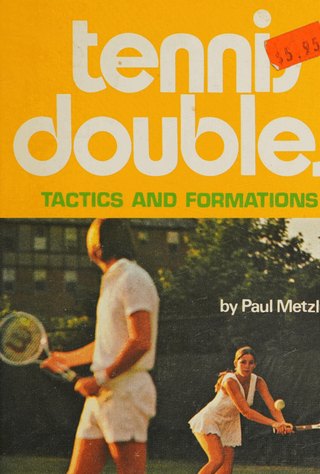
Tennis Doubles: Tactics and Formations
Author: Paul Metzler · Photographs by Leon Serchuk
Three fundamental formations — two back, one up and one back, both up — and the coordination that makes them work: the deep serve, the poach, the switch, and the communication that holds a pair together.
Classic · Doubles
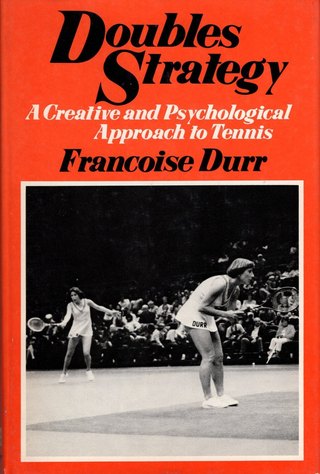
Doubles Strategy
Author: Françoise Dürr with the Editors of Tennis Magazine
From a player with more than twenty Grand Slam titles: the geometry of the doubles court, how the alley changes the available angles and the time a ball is in flight, and the positioning that follows from both.
Classic · Doubles
Intelligent Doubles
Author: Skip Singleton (USPTA) · Foreword by Rod Laver
Eleven chapters praised by Evonne Goolagong-Cawley, Neale Fraser, Virginia Wade and Owen Davidson. Singleton starts from why doubles is a different game, then builds the serve, the return and the partnership.
Modern · Doubles
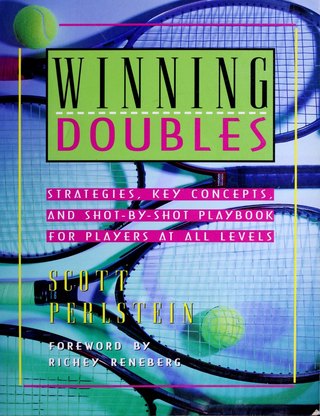
Winning Doubles
Author: Scott Perlstein · Foreword by Richey Reneberg
Fourteen chapters from the foundations to a tactics notebook of sixty-four sample exchanges: the four player roles, the art of pairing, and the patterns that win at the net.
Classic · Doubles
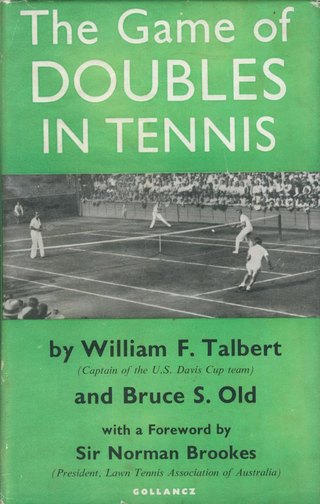
The Game of Doubles in Tennis
Author: William F. Talbert & Bruce S. Old
The book Arthur Ashe named as the standard work, with all 147 diagrams of points unfolding from serve, return and net position. Talbert and Old effectively wrote the tactical grammar that modern doubles still uses.
Classic · Doubles
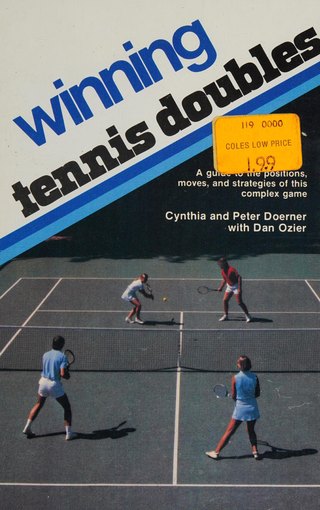
Winning Tennis Doubles
Author: Norma Doerner
Forty-five continuous photographic sequences analysing racket opening, contact point, foot placement, and the synchronised movement that makes a doubles pair faster than the sum of its two halves.
Classic · Doubles
Tennis Doubles: Tactics and Formations (Photographic Edition)
Author: Paul Metzler · Photographs by Martin Rule
Six chapters from the standard two-back formation through one-up-one-back to the full net game, on both serve and return, closing with the lob and the problems that decide close matches.
Classic · Doubles
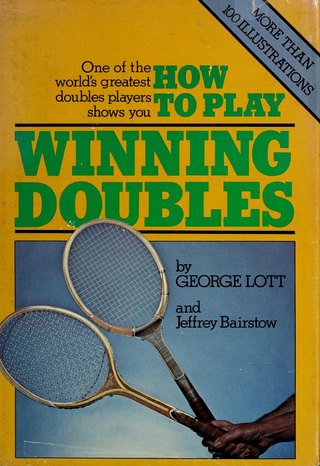
How to Play Winning Doubles
Author: George Lott & Jeffrey Bairstow (Dial Press)
George Lott, the man they called the Bill Tilden of doubles, on the angled dink into the alley, the three-target serve, the lob as a weapon rather than a rescue, and the poaching that breaks a pair's rhythm.
Classic · Doubles
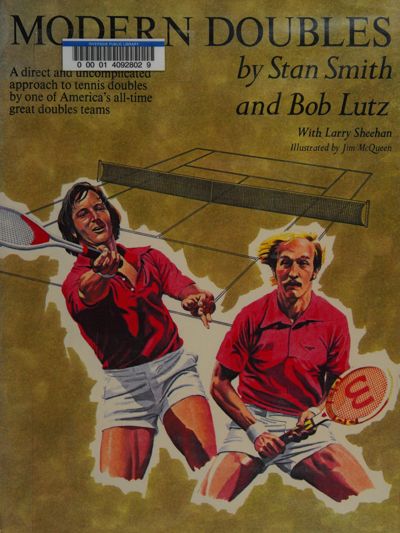
Modern Tennis Doubles
Author: Stan Smith & Bob Lutz with Barry Tarshis
Twelve chapters from one of the greatest doubles teams ever assembled: four golden principles that govern any situation, eight rotating roles, and the understanding two players build over years of standing on the same side.
Modern · Doubles
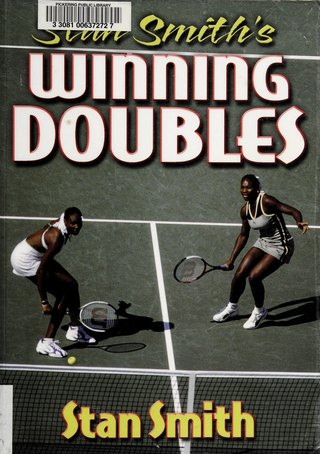
Stan Smith's Winning Doubles
Author: Stan Smith (Human Kinetics)
Smith's manual for building a team rather than finding a partner: the serve-and-volley division of labour, and the seven chapters of positioning, communication and shot selection that follow from it.
Modern · Doubles
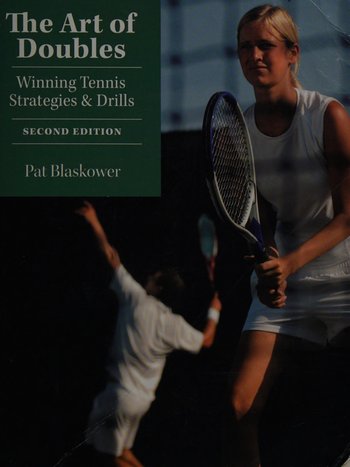
The Art of Doubles
Author: Pat Blaskower (Human Kinetics)
All fourteen chapters, unabridged: the terminator role, the poach, the switch, and the shot combinations that let an ordinary pair beat a better one. Blaskower is among America's most respected doubles coaches.
Classic · Doubles
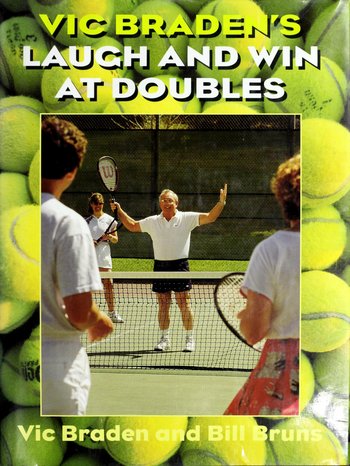
Vic Braden's Laugh and Win at Doubles
Author: Vic Braden & Bill Bruns
Neuroscience, biomechanics and comedy in one book. Braden shows how a smile releases muscles clenched by tension, locates the imaginary X that fixes court position, and treats doubles as a game to be enjoyed rather than survived.
🏋️ Coaching, Teaching & Conditioning (13 works)
Curricula, pedagogy and physiology for the people doing the teaching — including the USTA, USPTA, ASEP and German Tennis Federation standard texts.
Classic · Advanced Play
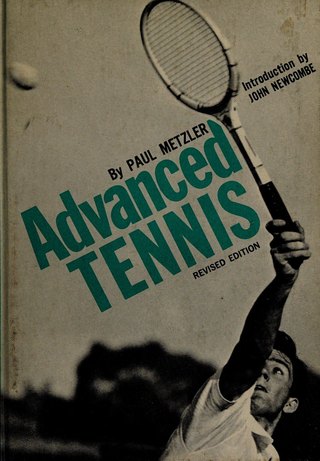
Advanced Tennis
Author: Paul Metzler · Introduction by John Newcombe
Competitive character and stroke mechanics from a coach who worked with Newcombe and Roche: eliminating double faults through head position, the timing pause, and the tactical reading that separates a good player from a dangerous one.
Coaching · Science
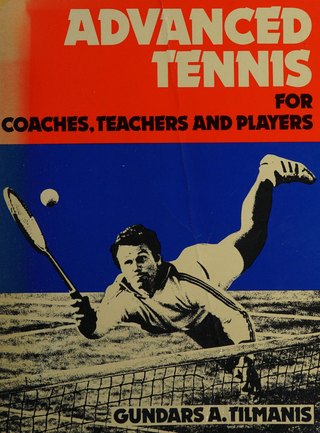
Advanced Tennis for Coaches
Author: Gundars A. Tilmanis (BSc, MSc Oregon)
The physics of the sport for the person teaching it: the law of centre-of-gravity transfer, the Magnus aerodynamics of each spin, and a problem-solving method for diagnosing a fault rather than reciting a correction.
Coaching · USTA
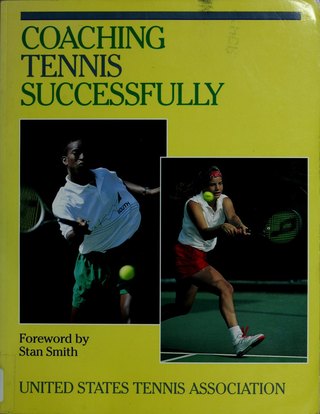
Coaching Tennis Successfully
Author: USTA & Ron Woods, PhD · Foreword by Stan Smith
The USTA's standard coaching manual: pedagogy, the kinetic chain taught as a sequence, singles and doubles tactics, and the season planning that turns a squad into a programme.
Coaching · Juniors
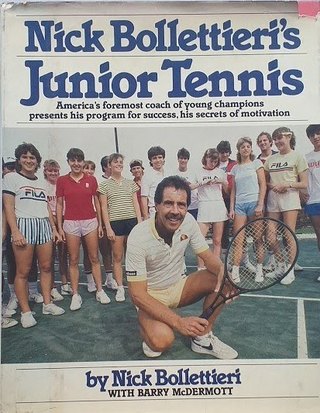
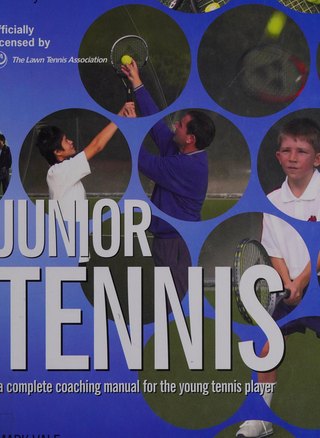
Nick Bollettieri's Junior Tennis
Author: Nick Bollettieri (founder, NBTA)
Developing players aged eight to eighteen: the iron discipline of Bradenton, the boundary between parent and coach, the modern attacking forehand, and the serve mechanics that produced ten world number ones.
Coaching · Sport Science
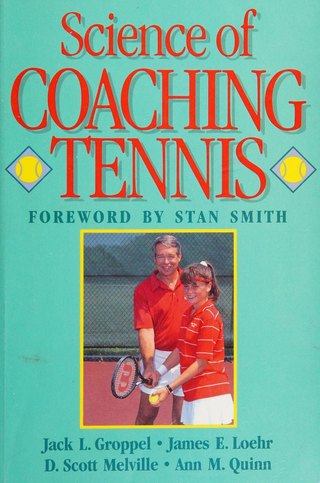
Science of Coaching Tennis
Author: Jack Groppel, PhD · James E. Loehr, EdD · Peter Powless
The most complete sport-science treatment of tennis coaching: Newtonian biomechanics, the kinetic chain, motor learning and the design of variable practice. A USTA and Human Kinetics collaboration between three leading researchers.
Coaching · USPTA
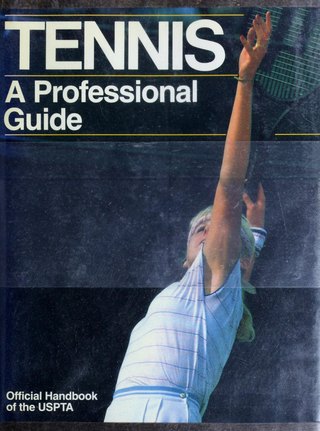
Tennis: A Professional Guide
Author: USPTA — Jack Kramer, Paul Xanthos, Bill Tym, Nick Bollettieri
The official textbook of the United States Professional Tennis Association: Groppel on the kinetic chain, the lever systems of a stroke, and the professional standards of teaching. A Kodak-backed reference.
Coaching · Juniors
The Young Tennis Player
Author: John Newcombe & Clarence Mabry · Photographs by Russ Adams
From a seven-time Grand Slam singles champion and a legendary college coach: advice for parents, a staged progression for juniors, and the technical foundation that survives adolescence.
Health · Mind & Body
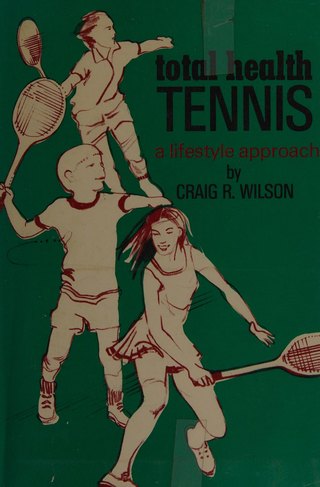
Total Health Tennis: A Lifestyle Approach
Author: Craig R. Wilson (Whitmore Publishing)
Movement medicine, mental imagery and an integrated philosophy of living: dissolving the body–mind split, choreographing footwork on an imagined court, and the silver-tray technique that steadies a serve under pressure.
Conditioning · USTA
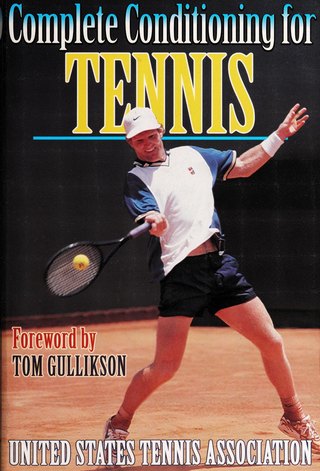
Complete Conditioning for Tennis
Author: USTA · Paul Roetert, PhD & Todd Ellenbecker, DPT
Seventeen fitness tests, more than fifty strength exercises, a protocol for protecting the rotator cuff, and speed and agility work including the Spider drill. The USTA's conditioning standard in ten chapters.
Coaching · Youth
Coaching Youth Tennis
Author: ASEP & Ron Woods (USTA)
The American Sport Education Program's coaching course: the games approach to teaching, the I-D-E-A instructional model, R-I-C-E first aid for court injuries, and how to keep children playing rather than quitting.
Coaching · Complete Manual
Bollettieri's Tennis Handbook
Author: Nick Bollettieri (Hall of Fame)
The most comprehensive manual from the coach who shaped Agassi, Sampras, Courier, Seles, Sharapova and the Williams sisters: stroke production, periodised training, and the academy system that industrialised player development.
Coaching · Pedagogy
Teaching Tennis, Volume 1
Author: Martin van Daalen (USTA national coach)
A USTA national coach's pedagogy: the player-centred approach, the physical and psychological milestones from five to eighteen, and a five-step lesson structure that holds a group's attention.
Medicine · Sports Injuries
Assessment, Treatment & Rehabilitation
Author: Giovanni Di Giacomo, Todd S. Ellenbecker & W. Ben Kibler (eds.)
The authoritative medical reference for tennis, edited by three of the field's leading shoulder and sports-medicine specialists: the serve's kinetic chain, the compensatory overload patterns that follow it, and scapular dyskinesis.
🌱 Foundations & Complete Guides (6 works)
Where to begin, and the reference works to keep beside the court once you have.
Classic · Reference
228 Tennis Tips
Author: Rod Laver (two-time Grand Slam winner)
Two hundred and twenty-eight practical tips from the only man to win the Grand Slam twice: grip, serve, volley, forehand, backhand, and the small adjustments that add up to a level. Advice from a player who never wasted a shot.
Classic · Instruction
Knowabout Tennis
Author: Sue Rich · Photographs by Allsport
A model instructional text: Continental, Eastern and Semi-Western grips, the low-to-high swing geometry, the kick serve's mechanics, and the structured practices that make them stick.
Classic · Beginner
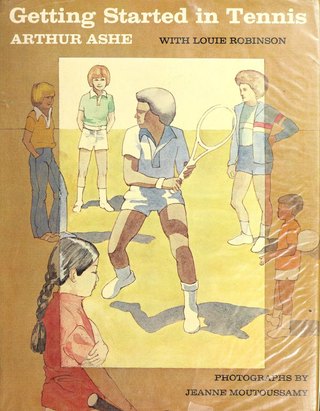
Getting Started in Tennis
Author: Arthur Ashe with Louie Robinson · Photographs by Jeanne Moutoussamy
All eighteen chapters of Ashe's Atheneum classic: the volley taught before the groundstroke, the serve as a throwing motion, and a beginner's path that respects the learner rather than the syllabus.
Classic · Visual Course
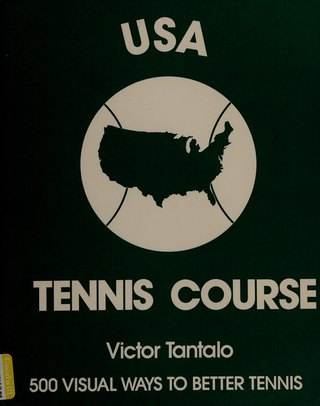
USA Tennis Course: 500 Visual Ways to Better Tennis
Author: Victor Tantalo · Illustrated by Anne Brown Tantalo
A management consultant who took up coaching at fifty found the sameness beneath every stroke: the vertical plane of contact, the shared geometry, one motion wearing different disguises. Five hundred visual steps.
Classic · Encyclopaedic
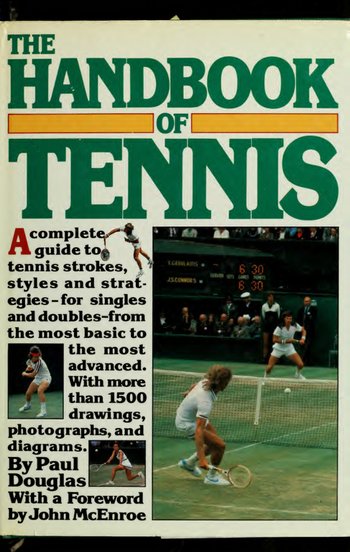
The Handbook of Tennis
Author: Paul Douglas · Foreword by John McEnroe
The most detailed encyclopaedia in the tennis literature, examining every stroke millimetre by millimetre — forehand, backhand, volley, smash, serve — in a book designed by a master of the form.
Beginner · Complete Guide
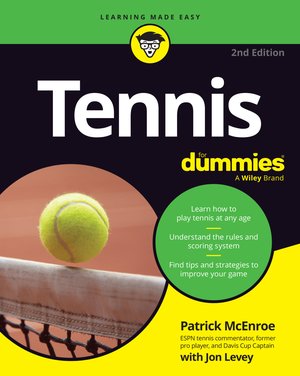
Tennis For Dummies
Author: Patrick McEnroe & Peter Bodo (Wiley)
The global beginner's standard: court layout, the strange arithmetic of Love, 15, 30, 40, the strokes, the etiquette, and enough strategy to hold a rally and enjoy it. Written by a Davis Cup captain and a veteran writer.
🏛️ History, Philosophy & Memoir (7 works)
The game as culture: Ashe's tour diary, the 2008 Wimbledon final, charisma read through Bonnard and Vuillard, and Machiavelli on the doubles court.
Classic · Technique & Tactics
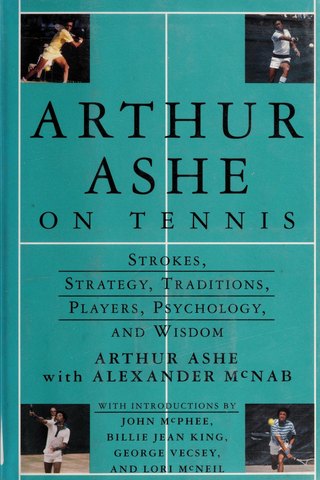
Arthur Ashe on Tennis
Author: Arthur Ashe & Alexander McNab
Ashe's last book: the mechanics of the standard strokes, the five-shot rule for every point, and the tactical masterpiece of his win over Jimmy Connors. With a memorial foreword by John McPhee and Billie Jean King.
Classic · Technique
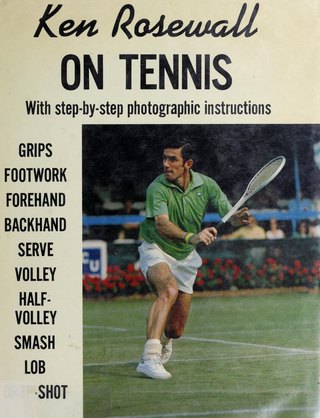
Ken Rosewall on Tennis
Author: Ken Rosewall (eight Grand Slam singles titles)
From the owner of the finest backhand slice in the game's history: controlling the tempo of a match, a classical grip held firmly, footwork that saves energy rather than spending it, and the patience to wait for the right ball.
Journalism · Profiles
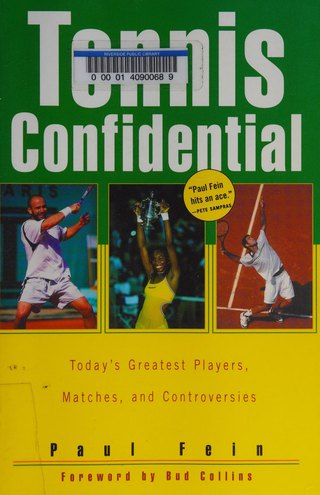
Tennis Confidential
Author: Paul Fein · Foreword by Bud Collins
Award-winning sports journalism on the sport's hidden corners: the Williams sisters' resolve, Agassi, Sampras, the tragedy of the overbearing tennis parent, and the politics of the professional tour.
Strategy · Doubles
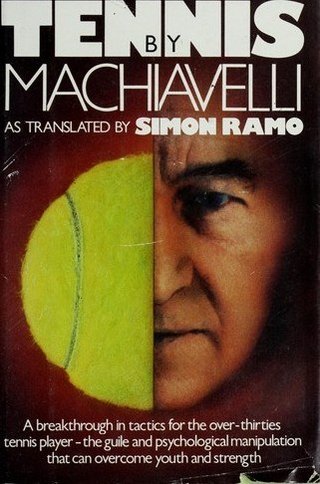
Tennis by Machiavelli
Author: Simon Ramo, PhD (Rawson Associates)
Machiavelli's logic applied to a tennis court: doubles as a problem of positioning rather than power, the manipulation of serve and return, and the cold arithmetic of giving an opponent the shot he dislikes.
Memoir · Tour Diary
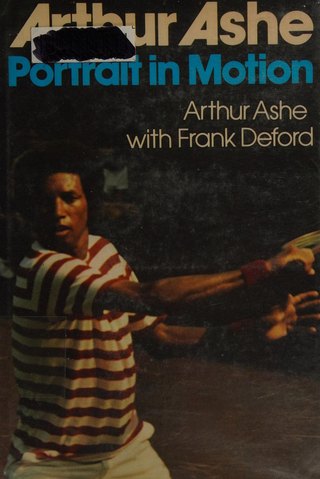
Portrait in Motion
Author: Arthur Ashe & Frank Deford
Ashe's diary of the 1973–74 tour, across seventy-one cities and five continents: tactical analyses of matches against Borg, Connors and Nastase, and an honest record of what the travelling life costs.
Journalism · Match Study
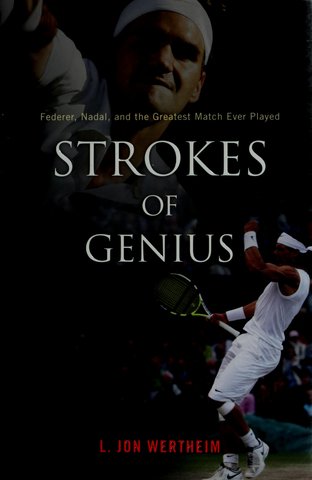
Strokes of Genius
Author: L. Jon Wertheim (Sports Illustrated)
The 2008 Wimbledon final between Federer and Nadal, reconstructed as the collision of two complete philosophies — classical elegance against relentless topspin — by Sports Illustrated's senior tennis writer.
Culture · Aesthetics
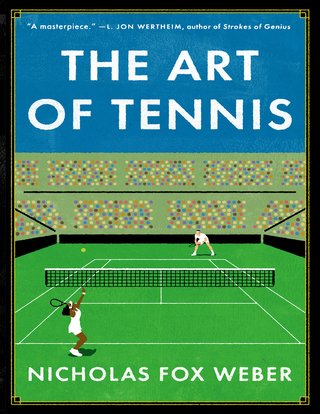
The Art of Tennis
Author: Nicholas Fox Weber
A cultural historian's essay on charisma: what makes a champion magnetic, read through Pierre Bonnard's and Édouard Vuillard's paintings of country-house tennis, and through the players who made the game an art.