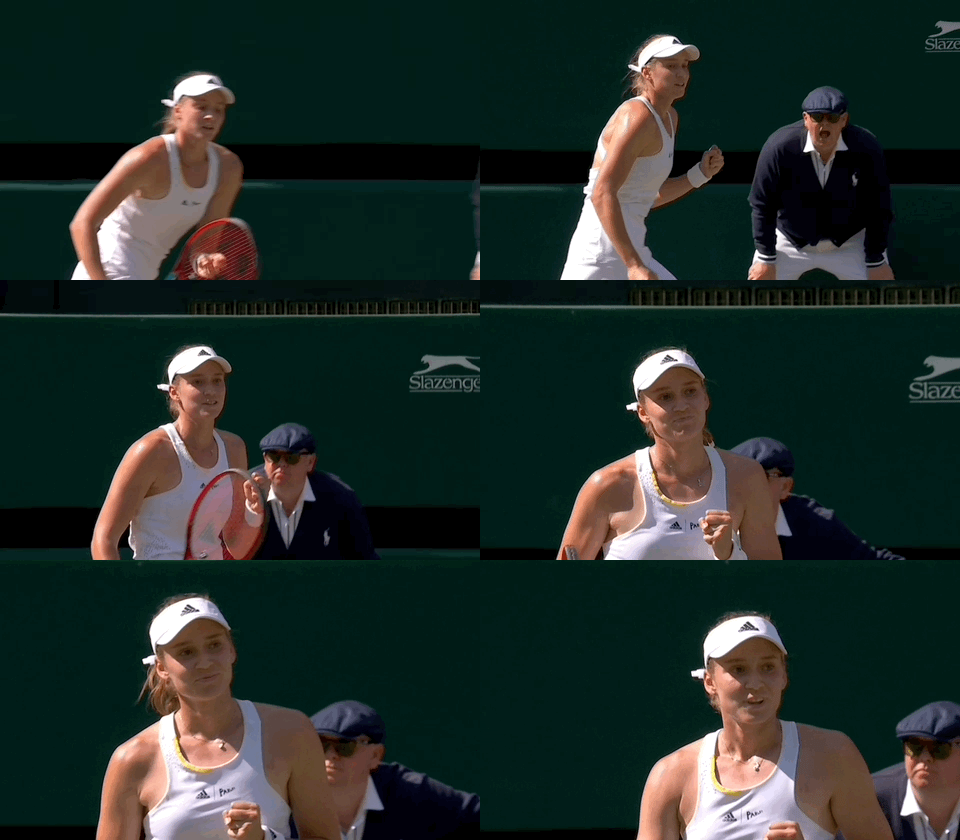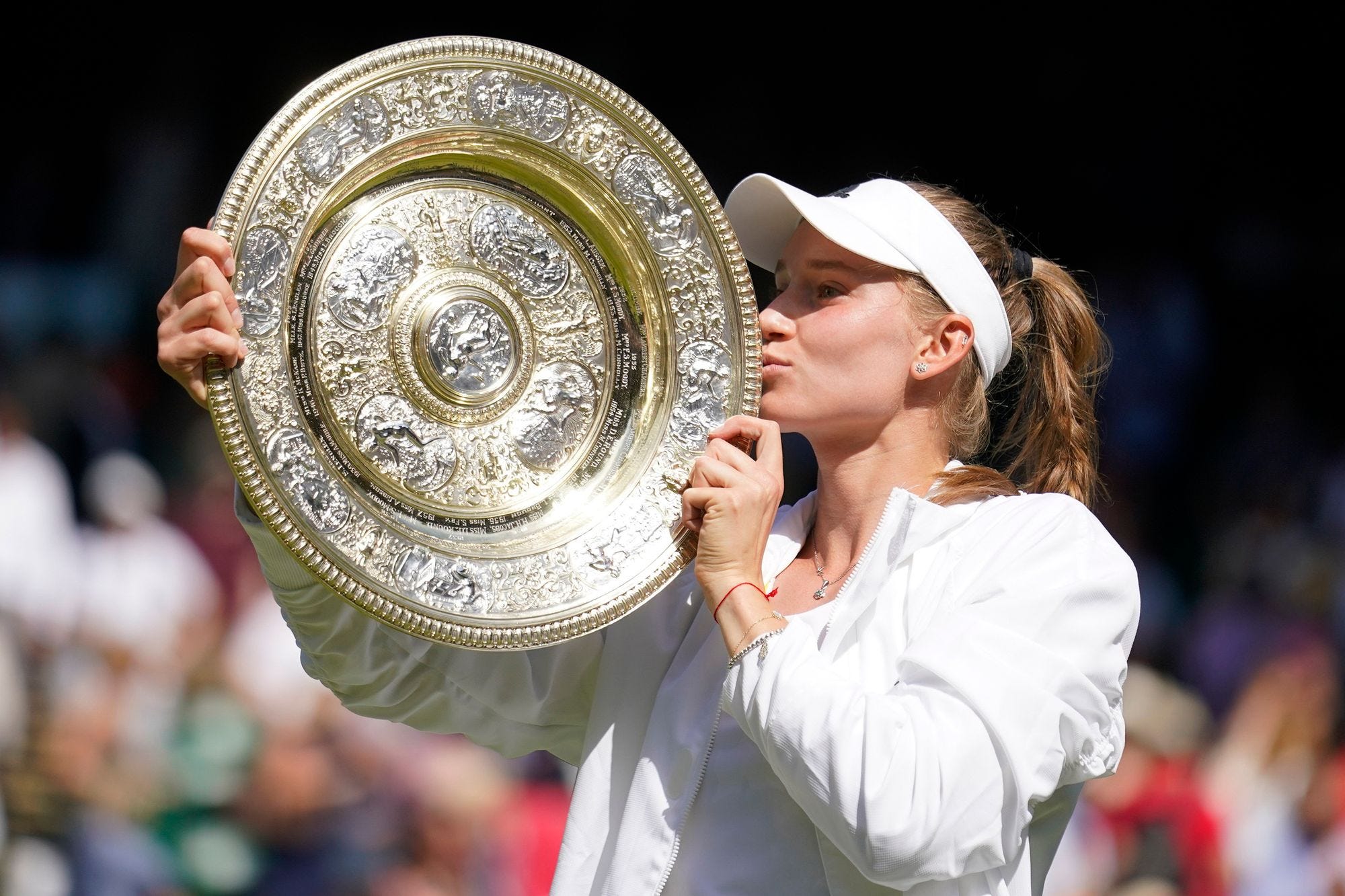
Last Saturday, Elena Rybakina won Wimbledon.
Very few saw it coming. Elena Rybakina had made it to one Grand Slam quarterfinal in her young career and was around 22nd for match-winning percentage over the last 52 weeks.
For those in the know however, Rybakina had always been a dormant volcano full of latent potential. With a first-serve regularly topping 115mph and flat pacey groundstrokes that skip through the court, it had always been a matter of putting it all together.
So though Ons Jabeur was the favourite going into this final, should we be that surprised Rybakina emerged victorious?
Was it the Tunisian or the Kazakhstani's final to win/lose?
Enjoy our analysis of this gripping Wimbledon final 🏆
Learning From The Warm-Up
Normally I'd have all the stats for you on how the dynamic of a match changed following a player dropping a first set...
But it's not unfair to say Rybakina was still warming into the match for nearly the entirety of the first set.
Rybakina wasn't quite hitting her spots on her first-serve. She was landing it often enough but her unreturned first-serve rate increased from 21% in the first set to 32% in the final two sets.
Rybakina's groundstrokes were pretty erratic. Her groundstroke error per point rate decreased from 30% in the first set to 15% in the second and third sets - she literally cut her errors in half extending her average rally length on return from 3.1 shots to 4.1 shots.
Though Rybakina hadn't fully settled, we learnt some vital information from this first set...
Rybakina absolutely wasn't comfortable being pulled forward. She'd only found herself at the net five times in the first set but she'd lost the point every time. Jabeur's junk might have some effect after all!
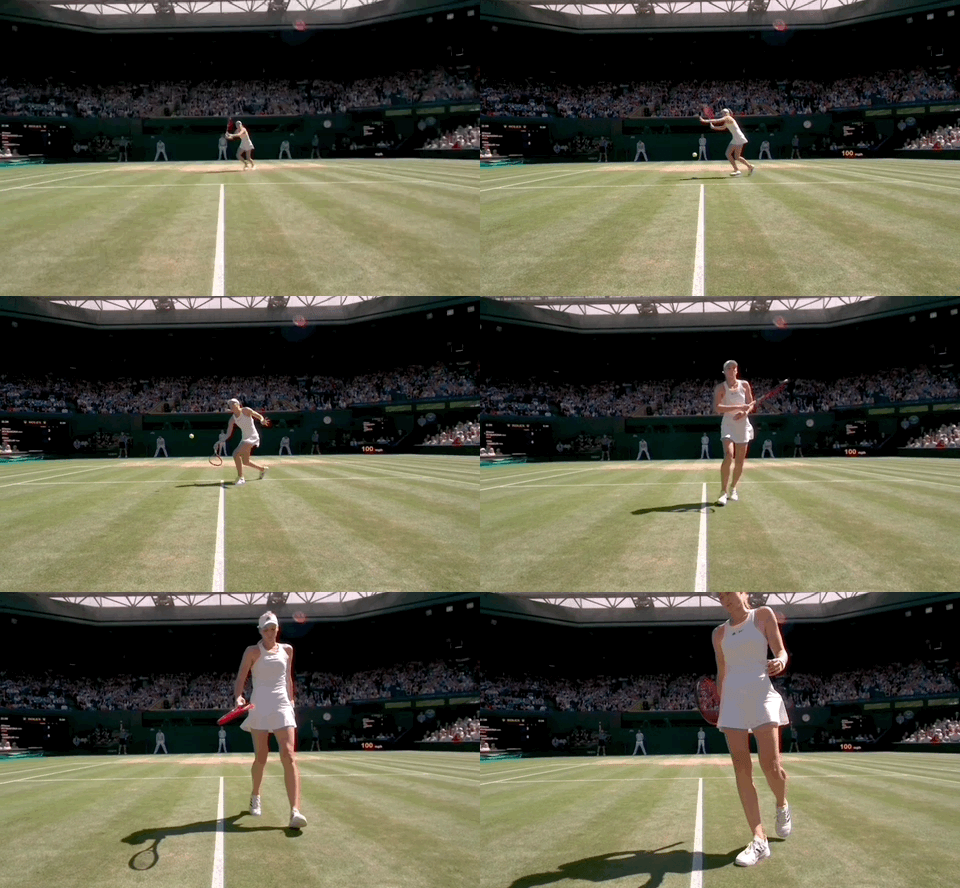
When Rybakina could find her groundstrokes, the power was immense and immediate.
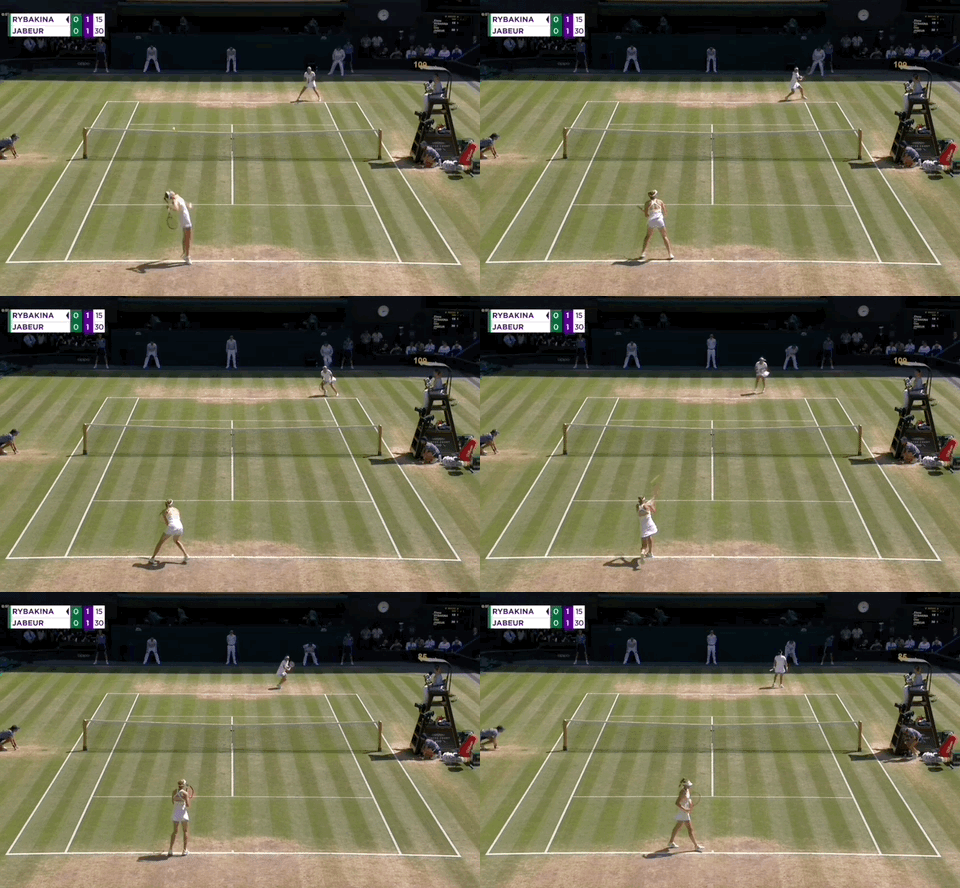
So plenty of foreshadowed potential, uncomfortable at the net but overall too erratic from Rybakina to draw any proper conclusions.
As Ons said...
I felt like she was playing better in the second and third set because she made less mistakes.
... and as Elena said...
Maybe the first set I was too nervous. Of course, Ons, she played well. I needed time to adjust to her game... I knew I have this big weapon, serve, but it didn't work out for the whole first set.
The first set wasn't a good reflection of Rybakina's level.
The next two sets however...
Rybakina In Flight
From the second set onwards, Rybakina played the way she had throughout the tournament.
Here's where the real analysis comes in.
The Rybakina Forehand
There's a lot to be said about the Rybakina forehand. It's undoubtedly terrifying and is a huge reason why people see so much potential in her particulary when coupled with her first-serve.
But historically it has been liable to breaking down... Keep that in mind.
Match-Up
The first important thing to note is Rybakina had the advantage trading cross-court forehands with Ons.
Though Rybakina's forehand can be unsteady, Jabeur's is more prone to going AWOL. The forehand cross-court is also not a preferred shot of hers - she generally opts to change direction more frequently than most players[1].
With Rybakina generating more pace from her forehand cross-court, Jabeur found it harder than usual to change direction off that wing than she would against most players or she wound up being the first to make the error (Rybakina +5 winners/forced errors using forehand cross-court to Jabeur's -2).
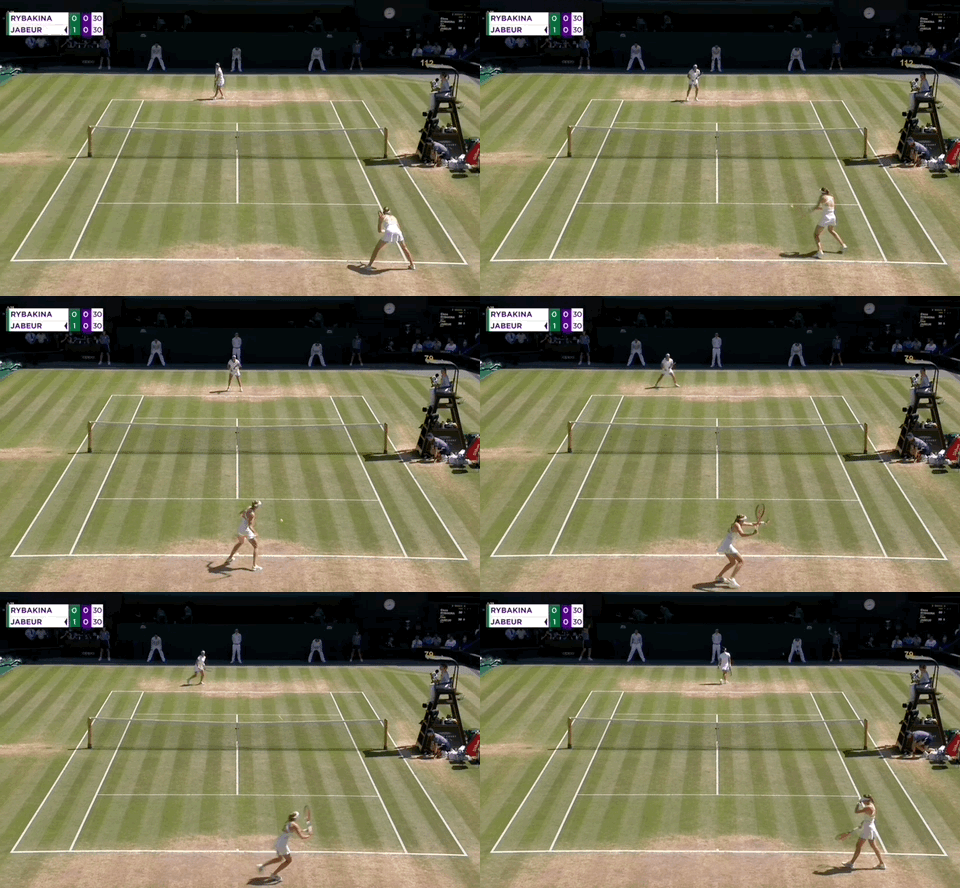
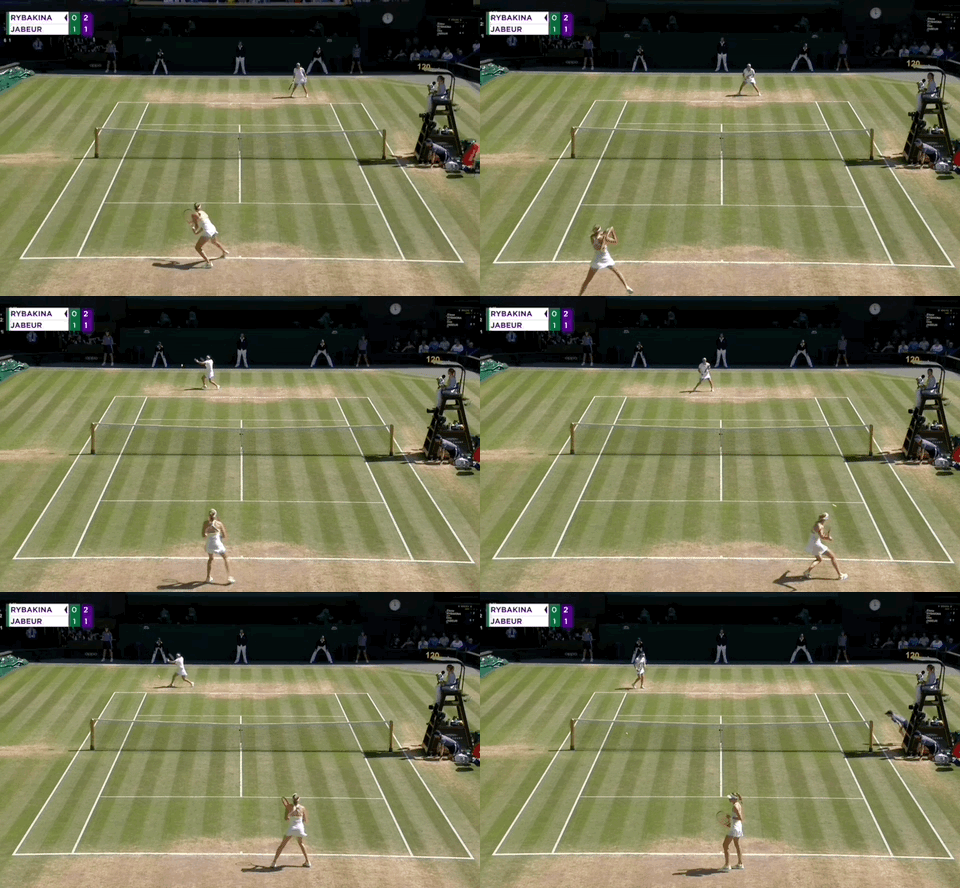
Despite having this advantage, Rybakina still won only 56% of the points including her forehand in sets 2 and 3, not an overwhelming majority.
This was because it wasn't always doom and gloom when Rybakina struck this shot. Jabeur's ability to improvise off this wing using forehand slices kept her afloat for the most part.
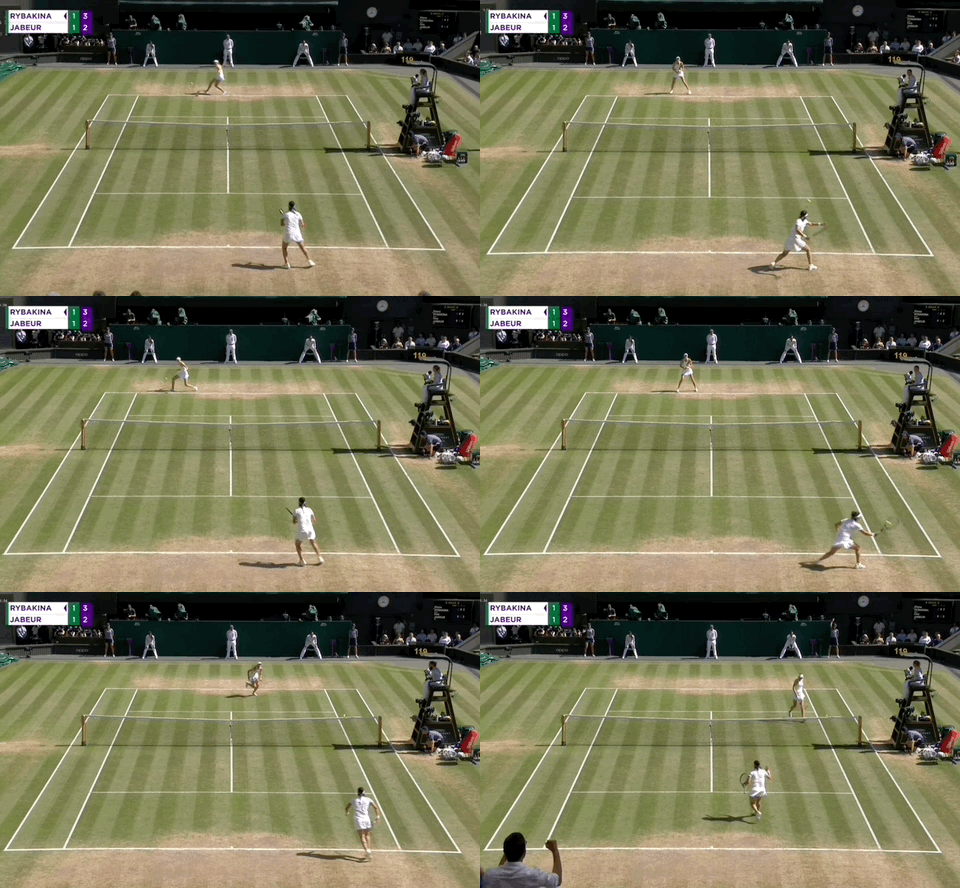
As Elena said...
In the end I was just running to all these dropshots. I think it was first time really when I run so much to all these tricky shots from Ons.
This generally kept Jabeur competitive when responding to the Rybakina forehand.
Pressure Improvements
Ironically however, Rybakina's forehand was at its most useful under pressure.
Whether it's a confidence thing or work done with her coach Stefano Vukov only she knows but it was clear some of the cracks had been filled in.
Rybakina faced seven break points throughout the final two sets and saved all seven...
2nd set, 1-0 40-Ad: An unreturned serve.
2nd set, 2-1 40-Ad: A Jabeur backhand slice unforced error.
3rd set, 3-2 30-40: A sumptuous backhand down the line.
2nd set, 2-1 40-Ad x 2; 3rd set, 3-2 0-40 and 15-40: The other four all featured a rifled forehand cross-court.
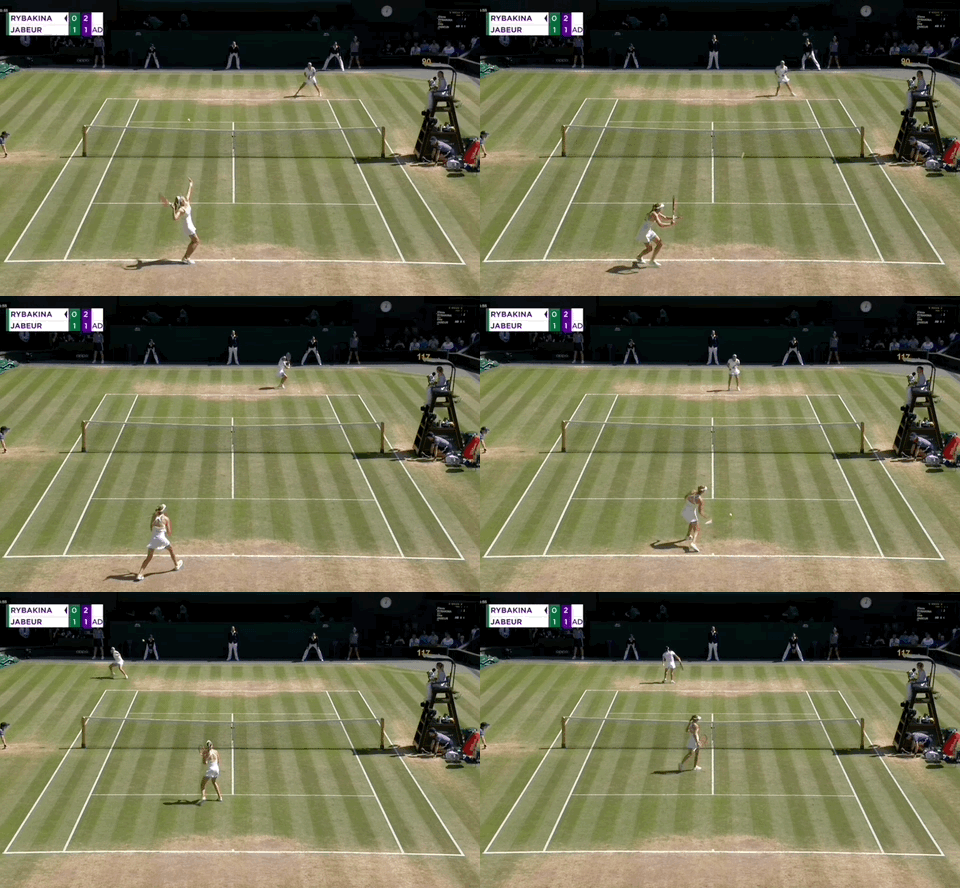
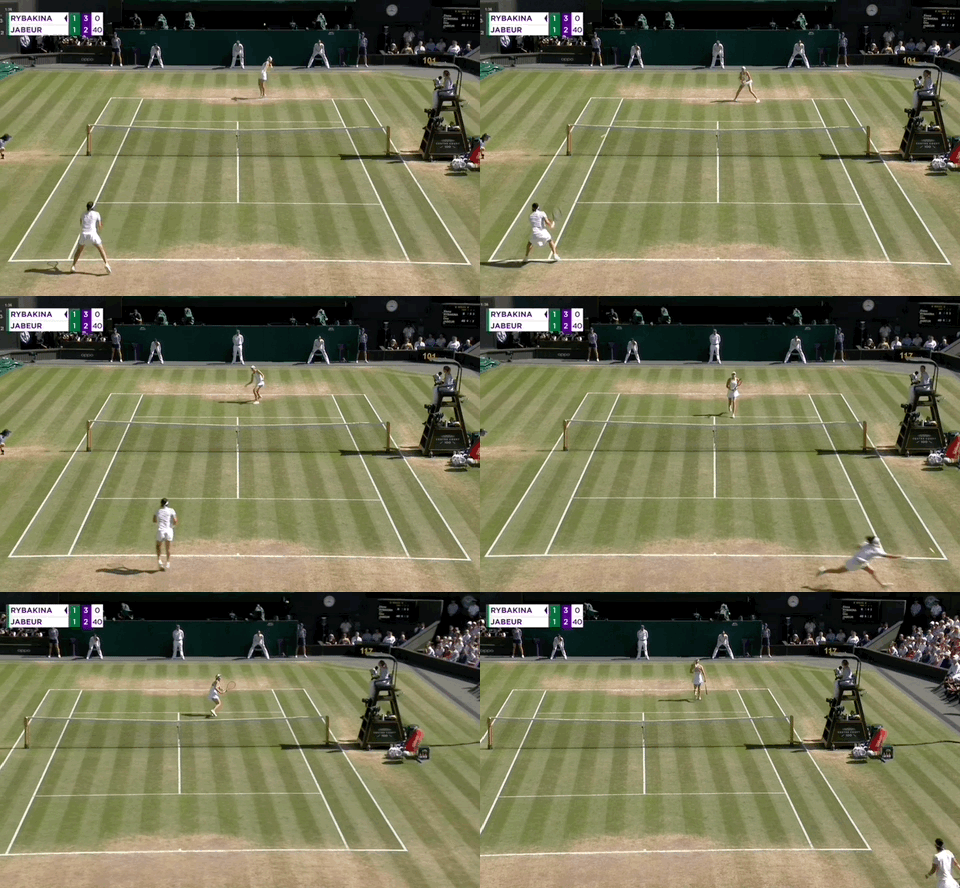
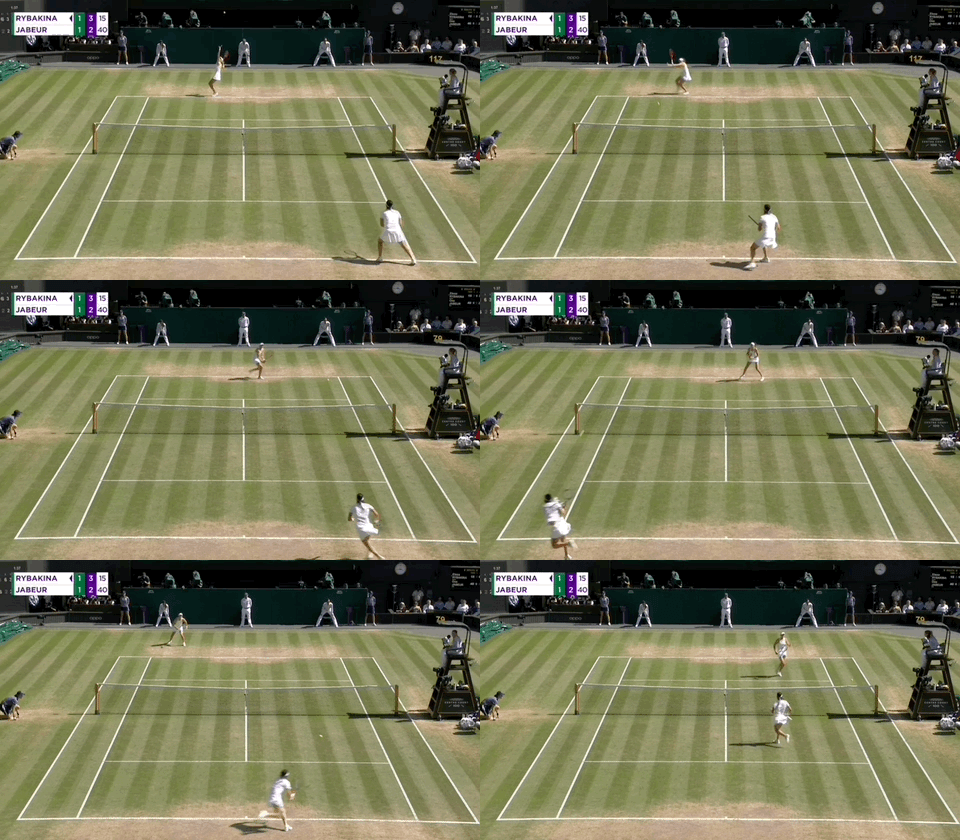
So Rybakina's forehand? It was a useful weapon overall but there were ways for Jabeur to magic her way round its power...
Fortunately it was atypically spectacular under pressure.
The Rybakina Backhand
Many will have watched the match thinking the Rybakina serve and forehand were immense, that those weapons normally attributed with her won her the match.
Rybakina's success on the backhand though, whoah nelly... She won 67% of the points that included her backhand in the second and third sets.
67%!
Rybakina's backhand is a compact, simple shot with decent potential for repeatability - this makes it very effective on return. It's also flatter than her forehand making it immensely effective on a grass-court.
Jabeur looked for solace in the backhand but found none.
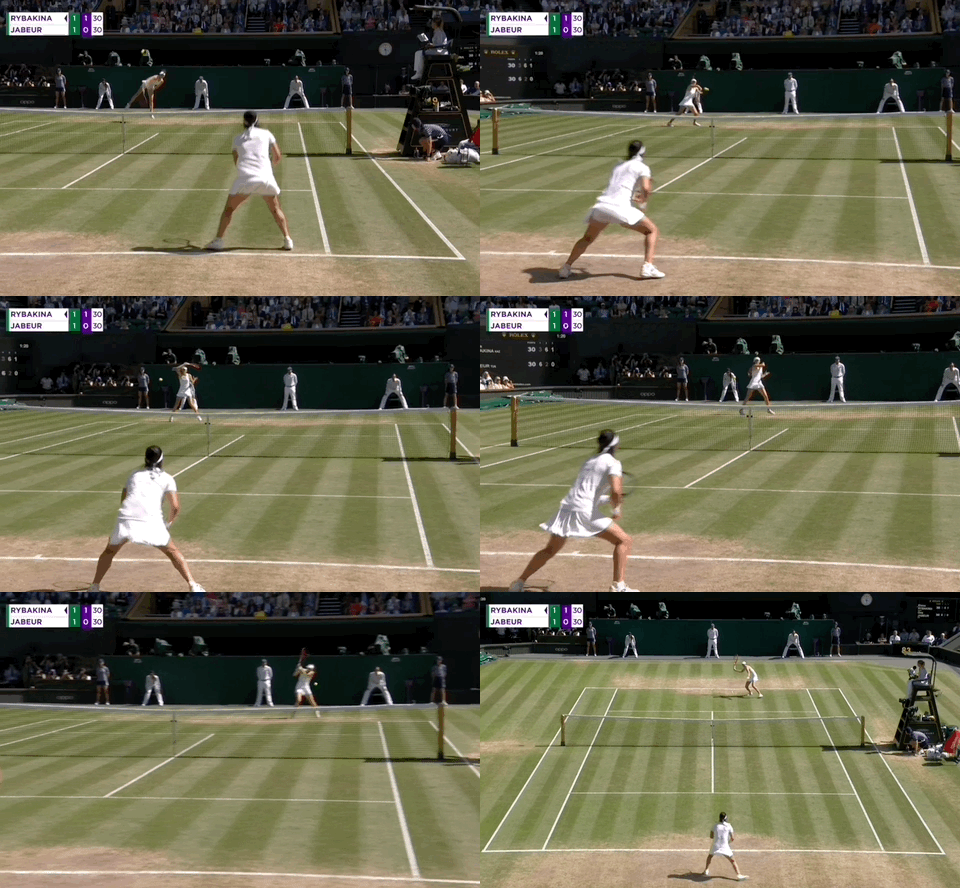
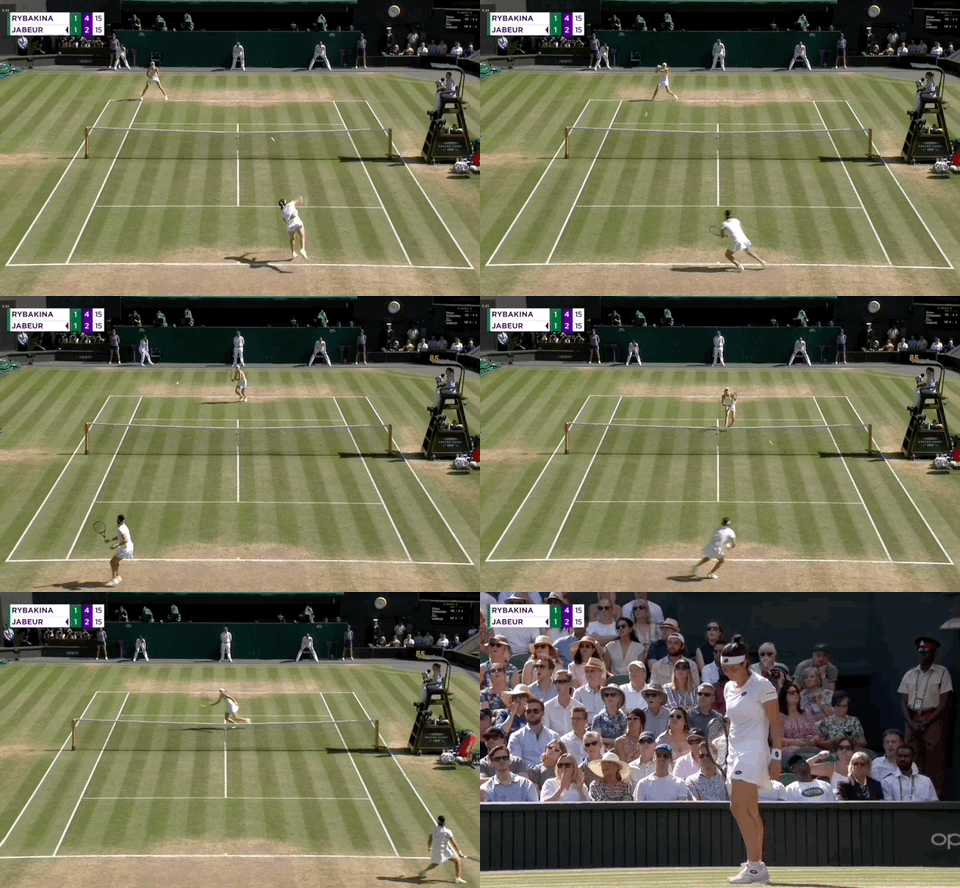
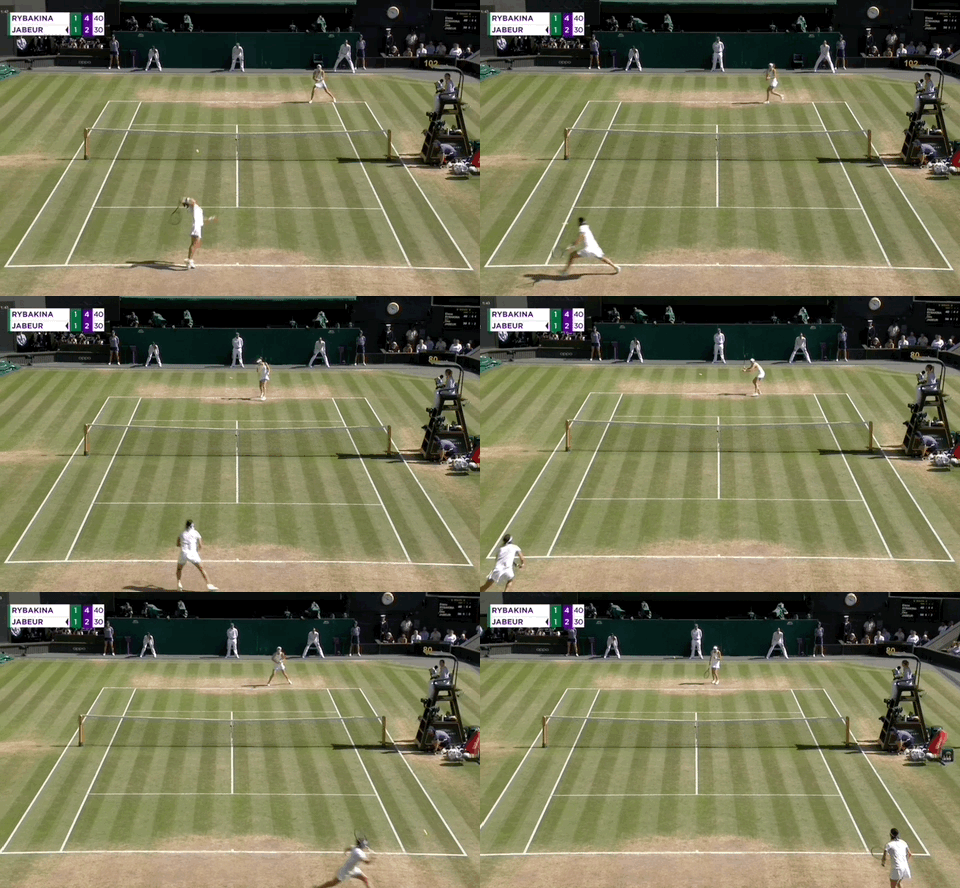
It's not the shot I expected Rybakina to use to win her first Grand Slam title and it probably wasn't the shot Jabeur was expecting to have to wrestle with either.
But boy is it more of a weapon than I'd first thought on a grass-court.
How Elena Rybakina defeated Ons Jabeur
So in summary...
Rybakina's nerves took a while to settle as the first set came and went in fairly untidy fashion.
As the match came to a steadier rhythm, the Rybakina forehand was the obvious force to be reckoned with. Jabeur responded instinctively at times but it was a constant uphill battle. Where Rybakina's forehand had previously been a little loose under pressure, it excelled in the most important match of her career.
Whilst the plaudits will likely go the Rybakina forehand for most viewers, it was the Rybakina backhand that was chipping away at any remaining Jabeur fan's hopes in the background. Jabeur was helpless on second-serve as the backhand return inflicted blow after blow to the Tunisian's defences.
No need to give Jabeur space to hit into.
No need to cover either wing.
No need to rely solely on the serve.
Both wings were used to take off in this match.
This was no flash in the pan. Elena Rybakina's dismissal of Ons Jabeur has definitely shown the world she has the game to own Wimbledon for years to come.