Neurological Foundation — Brain, Proprioception, Vision & Reaction Anatomy
Deep Dive #3 — The Anatomy & Geometry Project for Tennis Players 3.5 → 4.5
Table of Contents
| # | Chapter |
|---|---|
| 1 | The Reaction Chain — From Eye to Ball |
| 2 | The Eye — How Vision Drives the Stroke |
| 3 | Proprioception — The Hidden 6th Sense |
| 4 | The Brain Regions Behind a Tennis Stroke |
| 5 | Reaction Time, Decision Time, Movement Time |
| 6 | The Three Reaction Layers |
| 7 | The Vestibular System — Balance & Equilibrium |
| 8 | Neuroplasticity — Why 50+ Brains Still Learn |
| 📋 | Neurological Cheat Sheet |
Chapter 1 — The Reaction Chain — From Eye to Ball
Every tennis shot begins with this 7-step chain. Total time from "I see the ball" to "ball leaves my racket" is about 0.4–0.8 seconds for a 4.0 player. Here's where the time goes:
Step 1 — Photoreception (eye) — Light from the ball hits the retina. Photoreceptors (rods for motion, cones for detail) convert light into electrical signals. Time: ~0.05s.
Step 2 — Optic nerve transit — Signals travel from retina to the lateral geniculate nucleus (LGN) of the thalamus, then to the visual cortex at the back of the brain. Time: ~0.03–0.05s.
Step 3 — Visual processing (occipital + parietal cortex) — The brain identifies: where the ball IS, how FAST it's moving, what SPIN it has, where it will be in 0.5 seconds. Time: ~0.08–0.15s.
Step 4 — Decision (prefrontal + motor cortex) — Brain decides: "this is a forehand, down-the-line, 70% pace." Time: ~0.10–0.30s (this is where pros are MUCH faster than recreational players — by 0.10–0.20s).
Step 5 — Motor planning (cerebellum + basal ganglia) — Brain plans: which muscles fire in what order. Time: ~0.05–0.10s.
Step 6 — Motor cortex → spinal cord → muscles — Signals travel down the spinal cord, branch out to the peripheral nerves, reach the muscles. Time: ~0.05–0.10s.
Step 7 — Muscle contraction + tendon release — Muscles fire, tendons release, racket moves, ball is hit. Time: ~0.10–0.20s.
Total reaction time: ~0.45–0.95 seconds — Of this, the decision step (Step 4) is the slowest and most trainable.
The 3.5 player bottleneck — Step 4 takes ~0.30s for a 3.5 player, ~0.10s for a pro. That 0.20s difference is the main reason 3.5 players feel "always late." It's not the legs. It's the decision.
Master cue: "Train the decision. The legs are fine."
Chapter 2 — The Eye — How Vision Drives the Stroke
The eyes are the only input channel for tennis. The brain has NO direct contact with the ball. Everything it knows about the ball comes through vision (and sometimes sound for line calls).
The 3 visual systems in tennis
System 1 — Central vision (foveal) — The 2° sharp spot in the center of the retina. Color, detail, sharp edges. Used for: reading the spin, judging the contact point, fine-tuning the racket face angle.
System 2 — Peripheral vision (ambient) — The remaining ~160° of the retina. Motion, contrast, broad shapes. Used for: tracking the opponent's body position, noticing ball trajectory early, court awareness.
System 3 — The quiet eye — A specialized state where the gaze locks on a specific point (usually the contact zone) for ~0.3–0.5s before and during the stroke. This is the elite player's secret weapon.
Why "quiet eye" matters — Studies (Vickers, 1996, 2007) show that elite athletes have a quiet eye duration of 0.3–0.5 seconds. Recreational players have ~0.1–0.2 seconds. The longer quiet eye = better timing = better shot quality, regardless of physical ability.
The 5-Phase Visual Cycle (used by all elite players)
Phase 1 — Wide perception (soft eyes, ~0.5s before stroke) — Eyes are soft, gaze is wide, taking in opponent's body, court, ball.
Phase 2 — Lock-on (~0.3s before contact) — Eyes narrow to the ball. Gaze centers on the ball.
Phase 3 — Narrow focus (tunnel vision, ~0.1s before contact) — Gaze locks on the contact zone on the opponent's racket side.
Phase 4 — Quiet eye at contact (~0.05–0.1s) — Gaze is FIXED on the contact point. The eyes do not move. This is the critical period — no eye motion = no visual disruption.
Phase 5 — Re-expand (after contact, ~0.2s) — Gaze widens again to track the ball and read the opponent's response.
The 3.5 player's mistake — They look at the ball, swing, then look up to see where it went. That post-contact gaze breaks the quiet eye. Result: they don't see the ball well during contact, so contact quality is bad.
The fix — Practice the quiet eye. Stare at a fixed point on the wall for 0.5 seconds before swinging at a ball. Train the gaze to STAY during contact, not fly up.
For 50+ players — Vision starts declining around age 40–45 (presbyopia — loss of near focus). Tennis balls travel fast and are small. Use yellow balls on dark courts (highest contrast). Consider yellow-tinted glasses to enhance contrast.
Master cue: "See the ball arrive. Lock on. Stay locked through contact. Look up AFTER."
Chapter 3 — Proprioception — The Hidden 6th Sense
You have 5 senses everyone knows about — sight, hearing, touch, taste, smell. You have a 6th that almost no recreational player thinks about: proprioception. It is the sense of where your body is in space, WITHOUT looking.
Close your eyes right now. Raise your right hand above your head. You knew where your hand was without seeing it. That's proprioception.
The proprioception hardware — Specialized sensory receptors in your muscles, tendons, and joints. The most important are:
Muscle spindles — Tiny sensors INSIDE muscles that detect how MUCH the muscle is stretched and how FAST it's stretching. They are the FASTEST sensory organ in the body (~80 m/s nerve conduction).
Golgi tendon organs — Sensors at the muscle-tendon junction. Detect FORCE. They protect against over-contraction (the "force shut-off" reflex).
Joint receptors — In the joint capsules, especially knees, ankles, shoulders. Detect JOINT ANGLE and joint motion direction.
Skin stretch receptors — In the skin around joints. Detect skin stretch as the joint moves. Provides "extra" angle information.
Why proprioception is the hidden superpower — When you watch a pro hit a forehand, their body knows where it is at every millisecond WITHOUT looking. They don't need to "check" their elbow angle with their eyes — proprioception tells them. This frees the eyes for ball-tracking.
Proprioception accuracy by joint (typical 4.0 player)
Shoulder: can detect ~3°–5° of rotation change without looking.
Elbow: can detect ~2°–4° of flexion change.
Wrist: can detect ~2°–3° of flexion change.
Hip: can detect ~3°–5° of rotation change.
Knee: can detect ~2°–4° of flexion change.
Ankle: can detect ~2°–3° of dorsiflexion change.
The 3.5 vs 4.5 proprioception gap — A 3.5 player has ~30%–40% worse proprioception than a 4.5 player. This gap closes with training. Specific proprioception drills (closed-eye balance, single-leg stance, racket-position matching) can improve proprioception by 30%–50% in 8 weeks.
Why 50+ players need extra proprioception work — Proprioception declines ~10%–15% per decade after age 50. This is one of the main reasons older players lose balance and have more falls in daily life, not just tennis. Train it.
Master cue: "Close your eyes. Trust your joints. They know."
Chapter 4 — The Brain Regions Behind a Tennis Stroke
A tennis stroke is not "one thing" the brain does. It is at least 7 different brain regions working in sequence. Here is what each one does:
Region 1 — Occipital lobe (visual cortex) — Processes what you SEE. Recognizes the ball, the opponent, the court. Located at the back of the brain.
Region 2 — Parietal lobe (spatial processing) — Maps WHERE things are in space. Where is the ball relative to the player? Where are the lines? Where is the opponent moving?
Region 3 — Temporal lobe (pattern recognition) — Recognizes PATTERNS. Is this serve like the previous one? Is this forehand going cross-court or down-the-line? Pattern recognition is what makes pros "predict" shots.
Region 4 — Prefrontal cortex (decision) — Makes the DECISION. This is where "forehand, down-the-line, 70% pace" gets selected. Slowest region. Where pros differ most from recreational players.
Region 5 — Motor cortex (movement command) — Located in the strip running over the top of the brain (from ear to ear). Sends the actual MOVEMENT COMMAND down to the spinal cord. Different parts control different body parts — leg area is medial (top), arm/hand area is lateral (sides).
Region 6 — Cerebellum (timing & coordination) — At the back-bottom of the brain. The "AUTOPILOT." Coordinates all 7 steps above into smooth timing. The cerebellum is what makes a tennis stroke look smooth, not jerky.
Region 7 — Basal ganglia (habits) — Deep in the brain. The "AUTOMATIC PILOT 2." Stores learned motor patterns. When you've hit 10,000 forehands, the basal ganglia has the "forehand pattern" cached. You can hit it without thinking — that's the basal ganglia at work.
The brain's 3 speeds — Region 4 (decision) is slow (~0.1–0.3s). Region 5 (motor cortex) is medium (~0.05–0.1s). Region 7 (basal ganglia) is FAST (~0.02–0.05s) — it's a "cached" pattern. Elite players use Region 7 for almost every shot. Recreational players use Region 4 for almost every shot. This is the difference.
The 10,000-rep rule — Basal ganglia caching takes ~3,000–10,000 repetitions of the same motion. At 100 forehands/day, this is 30–100 days. That's how long it takes to stop "thinking" about a forehand and just HIT it.
Master cue: "Train the autopilot. Hit 100 forehands a day for 100 days. Stop thinking."
Chapter 5 — Reaction Time, Decision Time, Movement Time
Three different "times" are often confused. Each one has a different training method.
Reaction Time (RT) — Time from stimulus (ball leaves opponent's racket) to first detectable muscle activation. Pure reflex arc. Typically 0.15–0.25s for 4.0 player.
Decision Time (DT) — Time from stimulus to knowing WHAT shot to play. Includes pattern recognition + choice. Typically 0.10–0.30s for 4.0 player.
Movement Time (MT) — Time from decision to racket contacting ball. Typically 0.20–0.50s for 4.0 player (depends on how far you have to move).
Total time to respond — RT + DT + MT = 0.45–1.05s. The opponent's ball usually arrives in 0.5–0.8s. So if your total is 1.0s, you have ZERO margin. If your total is 0.5s, you have 0.3s of margin (very comfortable).
What dominates at 3.5 — Decision Time. A 3.5 player's DT is 0.10–0.20s slower than a 4.0 player's. They see the same ball at the same time, but they take longer to decide.
What dominates at 5.0+ — Movement Time. Elite players' MT is shorter because they take shorter, more efficient paths to the ball.
Training Reaction Time — Use ball machines, drop-and-react drills, or have a partner randomly drop a ball. Pure stimulus-response training.
Training Decision Time — Use RANDOMIZED ball machines. Have a partner call out "forehand!" or "backhand!" right before they hit a ball. Decision is the bottleneck.
Training Movement Time — Footwork drills. Split-step + reactive shuffle. Cone drills.
The 0.20s difference between 3.5 and 4.5 — That 0.20s comes mostly from Decision Time. A 3.5 player who does 100 random-decision drills/day for 6 months will close 70% of that gap.
Master cue: "Decision is the bottleneck. Train the brain, not the legs."
Chapter 6 — The Three Reaction Layers
Your nervous system has THREE reaction layers. Each fires at a different speed, for a different purpose. Understanding them explains why some tennis reactions feel automatic and others feel like hard work.
Layer 1 — The stretch reflex (spinal cord, ~0.05s) — When a muscle is stretched, sensors in the muscle (muscle spindles) send a signal DIRECTLY to the spinal cord, which sends a signal BACK to the same muscle to contract. Total time: ~0.05s. This bypasses the brain entirely.
Tennis example: When you do a split-step, your calf muscles stretch slightly. The stretch reflex fires, the calves contract, you push off. All in 0.05s, no brain needed.
Layer 2 — The startle reflex (brainstem, ~0.15s) — When a sudden stimulus (loud sound, sudden motion) occurs, the brainstem fires a fast response. Faster than conscious thought, slower than spinal reflex.
Tennis example: When your opponent suddenly hits a ball hard at you, the brainstem makes you flinch/step back BEFORE you consciously realize what's happening. Then your conscious brain takes over and decides what to do.
Layer 3 — The conscious decision (cortex, ~0.20–0.50s) — Full brain processing. Slowest, but most accurate. What we normally call "reaction time."
Tennis example: A drop shot — your conscious brain must decide "is this a drop or a drive?" then "do I run forward or stay back?" then "do I slice or volley?" All in 0.20–0.50s.
The training principle — The more a stroke is PRACTICED, the more it moves from Layer 3 to Layer 2 to Layer 1. Stroke automation = moving the response down the layers.
The split-step is Layer 1 — It is fully reflex. You don't "decide" to split-step. Your body just does it. That's why pro split-step looks the same every time. Train it as a reflex, not as a decision.
The ready position is Layer 2 — The startle-ready stance. A loud noise, a sudden opponent move — your body is already in the stance to react.
The shot choice is Layer 3 — Where you go, what you hit, what spin. This is the slow one. Train decision speed with random drills.
Why this matters for 50+ — Layer 1 reflexes slow ~10%–15% per decade after 50. Stretch reflex in the Achilles is often delayed, which is why older players are slower to react at the line. Train split-step explosively — it is THE most important reaction to keep sharp.
Master cue: "Train split-step as reflex (Layer 1), not as decision (Layer 3). 5000 reps to make it permanent."
Chapter 7 — The Vestibular System — Balance & Equilibrium
There is one more sense that tennis demands: the vestibular system. It is the sense of BALANCE, head motion, and gravity. It lives in the inner ear.
The vestibular hardware — Three semicircular canals (anterior, posterior, horizontal) detect HEAD ROTATION. Two otolith organs (utricle, saccule) detect HEAD TILT and LINEAR ACCELERATION.
Tennis demands — Constant head rotation (tracking ball), rapid head tilts (looking up at lob, down at drop), linear acceleration (running forward/backward), rotation (the unit turn, the X-factor stretch). The vestibular system has to keep up with all of it.
The VOR (vestibulo-ocular reflex) — When your head rotates, your eyes rotate in the OPPOSITE direction automatically to keep gaze fixed. This is why you can read a sign while shaking your head. It is a vestibular-ocular reflex. Time: ~0.015s. Faster than any conscious eye movement.
Why VOR matters for tennis — At impact, your head is moving (body rotation, forward momentum). The VOR keeps your eyes STABILIZED on the ball. Without VOR, your eyes would bounce around at impact and you would lose sight of the ball.
Why head STILL matters — "Head still" is a famous coaching cue. The reason is VOR. When your head is stable, your eyes can lock on the contact zone (quiet eye). When your head bounces, your eyes bounce.
The 50+ vestibular decline — Hair cells in the semicircular canals start dying after age 40. By 60, you may have ~20%–30% reduction in vestibular sensitivity. This is why older players lose balance more easily and get dizzy on quick direction changes.
Vestibular training for 50+ — Simple daily exercises (standing on one foot with eyes closed for 30 seconds × 3 reps, slow head rotations × 10 in each direction) can MAINTAIN vestibular function. It's never too late to start.
Master cue: "Keep your head still. Your eyes need stable ground to lock on the ball."
Chapter 8 — Neuroplasticity — Why 50+ Brains Still Learn
The old belief — "You can't teach an old dog new tricks. Brain stops learning at 25."
The science — WRONG. Neuroplasticity (the brain's ability to form new connections) continues throughout life. A 2020 study (Voss et al.) showed that older adults who learned a complex motor skill (juggling, tennis) showed measurable brain changes within 8 weeks. The 50+ brain is NOT fixed.
How learning changes the brain at 50+
Myelin thickens around practiced neural pathways — Myelin is the insulation around nerves. The more you practice a stroke, the thicker the myelin gets on that pathway. Thicker myelin = faster signal = smoother stroke.
New synapses form — Even at 70+, new connections between neurons form when you practice a new skill.
Brain regions grow — The cerebellum, motor cortex, and prefrontal cortex all show measurable GROWTH (gray matter increase) in response to motor learning, even at age 65+.
The 50+ learning principle — Same principle as 25, but SLOWER. New skills take ~1.5–2x longer to automate at 50+ vs 25. That's OK. The brain is still learning, just at a different pace.
The "use it or lose it" rule — Neural pathways that are not used get PRUNED. If you stop playing tennis for 6 months, you lose ~15%–25% of your automation. If you stop for 2 years, you lose ~40%–60%. The brain is always either growing or shrinking.
The minimum effective dose — For tennis automation maintenance at 50+: 2 sessions/week × 60 minutes × 20+ balls per stroke per session. Below this, automation slowly decays. Above this, automation grows.
The big take-home — Your 50+ brain can still learn tennis skills. It just needs: (1) more repetitions per skill, (2) more sleep for consolidation, (3) more recovery between sessions. The 3 Rs of 50+ neuroplasticity.
Master cue: "Old brain, new tricks. Slow but possible. 5000 reps make it real."
Chapter 9 — Anatomy_Lab Integration — The Three-Layer Control System
This chapter layers the specific control-system numbers from your Anatomy_Lab/ library (vestibular, vision, proprioception, reaction time cascade) onto the brain-region framework of this deep dive.
9.1 — The Vestibular System (The 3rd Layer of the Kinetic Chain)
Anatomy_Lab DD8 finding — the vestibular system is the 3rd layer of the kinetic chain (after proprioception and vision). It consists of 3 semicircular canals + 2 otolith organs (utricle + saccule) + hair cells + neural pathway to the brainstem.
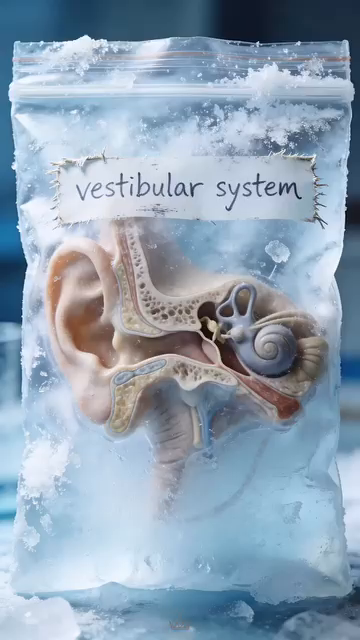
Figure 1 / Figure 1 — The 3 semicircular canals (anterior, posterior, horizontal) detect head rotation. The 2 otolith organs detect linear acceleration and head tilt.
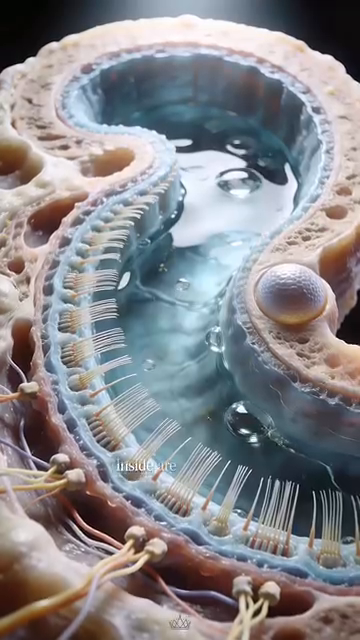
Figure 2 / Figure 2 — Otoconia: tiny calcium carbonate crystals in the otolith organs. These move with gravity and tell the brain which way is UP.
9.2 — The 5-Phase Visual Cycle (Quiet Eye)
Anatomy_Lab DD8 finding — elite tennis players use a 5-phase visual cycle when reading the ball. This is what Vickers (1996, 2007) called the "quiet eye."
| Phase / Pha |
|---|
| **1. Wide perception |
| **2. Lock-on |
| **3. Narrow focus |
| **4. Quiet eye |
| **5. Re-expand |
 |
|---|
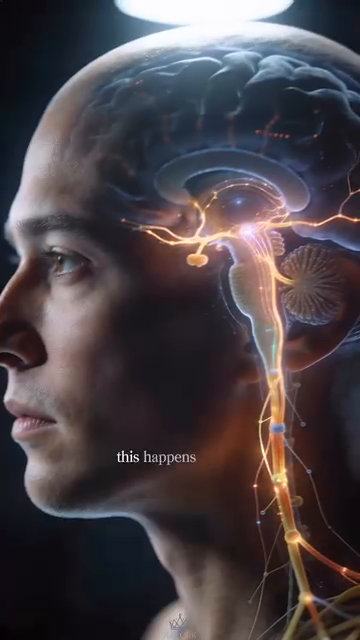
| **Figures 3 & 4 |
9.3 — The Reaction Time Cascade (Anatomy_Lab DD8 Numbers)
Anatomy_Lab DD8 reaction time cascade — total time from ball leaving opponent's racket to ball leaving your racket:
| Step | Stage | Brain / Body Region | Time |
|---|---|---|---|
| 1 | Photoreception | Eye (retina) | ~0.05s |
| 2 | Optic nerve transit | Retina → LGN (thalamus) → visual cortex | ~0.03–0.05s |
| 3 | Visual processing | Occipital + parietal cortex | ~0.08–0.15s |
| 4 | Decision | Prefrontal + motor cortex | ~0.10–0.30s |
| 5 | Motor planning | Cerebellum + basal ganglia | ~0.05–0.10s |
| 6 | Motor command transit | Motor cortex → spinal cord → muscles | ~0.05–0.10s |
| 7 | Muscle contraction + tendon release | Muscles/tendons → racket → ball | ~0.10–0.20s |
Total: ~0.45–0.95 seconds (per Chapter 1's reaction chain).
 |
|---|
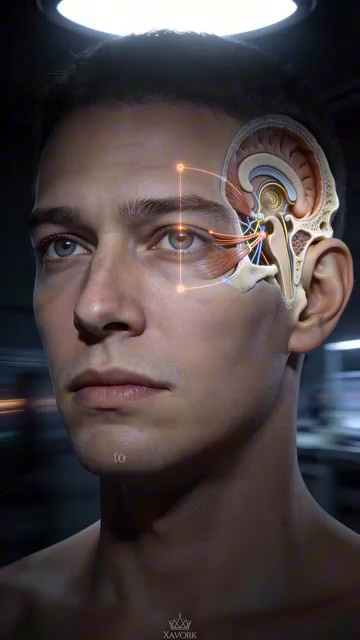
| **Figures 5 & 6 |
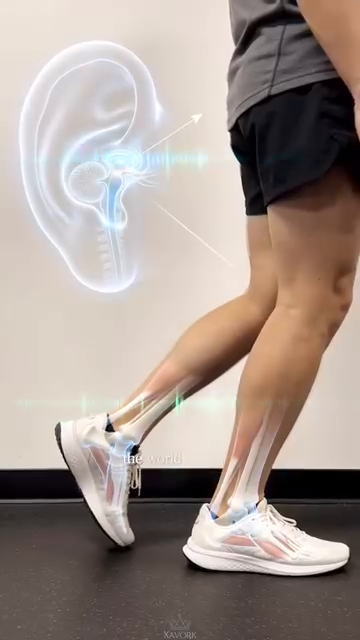
9.4 — The 50+ Sensory Triad (Anatomy_Lab DD8 Critical Insight)
Anatomy_Lab DD8 critical insight — at age 50+, THREE sensory systems decline SIMULTANEOUSLY:
| Sensory System | Onset of Decline | Magnitude | Practical Impact |
|---|---|---|---|
| Vision | ~Age 40–45 | Presbyopia (loss of near focus) | Harder to track a small, fast ball; use yellow balls / tinted glasses for contrast |
| Proprioception | After age 50 | ~10%–15% decline per decade | Reduced joint-angle awareness; more falls, less "feel" for the racket |
| Vestibular system | After age 40 (hair-cell loss) | ~20%–30% reduced sensitivity by age 60 | Balance loss, dizziness on quick direction changes |
 |
|---|
| **Figures 7 & 8 |
9.5 — The Foot as a 30 ms Reflex Sensor (Connecting to DD2)
Anatomy_Lab DD7 finding — the foot's 7,000+ nerve endings fire a reflex in 30 milliseconds, FASTER than conscious thought (~200 ms). This reflex IS the split-step mechanism.
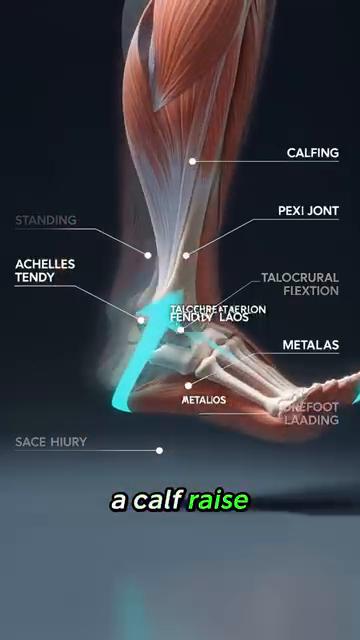
Figure 9 / Figure 9 — The dense nerve endings in the sole. 7,000+ sensors in each foot.
The control loop explained — Eye sees ball → brain decides (cortex, ~200 ms) → but BEFORE that, the foot has ALREADY started the split-step reflex (30 ms). The body starts moving BEFORE the conscious mind decides. This is why "anticipation" feels like reflex — it partly IS reflex.
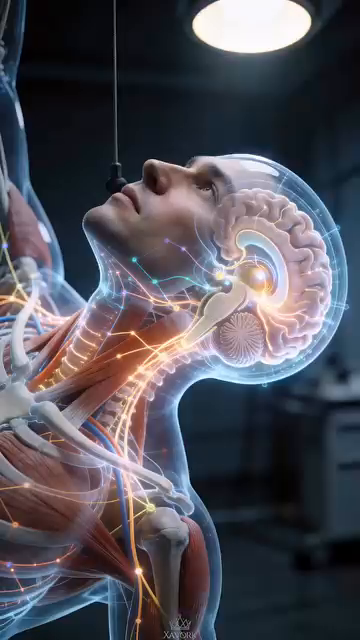
9.6 — Updated Brain-Region Map (Anatomy_Lab Sharpened)
| # | Brain Region | Role | Processing Speed |
|---|---|---|---|
| 1 | Occipital lobe (visual cortex) | Processes what you see — recognizes ball, opponent, court | n/s |
| 2 | Parietal lobe | Spatial processing — maps where things are | n/s |
| 3 | Temporal lobe | Pattern recognition — recognizes shot patterns | n/s |
| 4 | Prefrontal cortex | Decision-making — selects the shot | Slow (~0.10–0.30s) |
| 5 | Motor cortex | Sends the movement command down to the spinal cord | Medium (~0.05–0.10s) |
| 6 | Cerebellum | Timing & coordination — the "autopilot" | n/s |
| 7 | Basal ganglia | Stores learned motor patterns — the "automatic pilot 2" | Fast (~0.02–0.05s) |
n/s = no specific speed stated for this region in Chapter 4.
 |
|---|
| **Figures 10 & 11 |
📋 Chapter Card — Printable
Reaction time bottleneck is the DECISION step, not the legs. Train the brain with random drills and the body follows.
- Total reaction time: 0.45–0.95s for 4.0 player
- Decision time: 0.10–0.30s (the bottleneck)
- Quiet eye duration: 0.3–0.5s (elite), 0.1–0.2s (rec)
- VOR reflex time: ~0.015s (head-motion stabilizer)
- Stretch reflex time: ~0.05s (split-step layer)
- Proprioception accuracy: 2°–5° at joint level
Training only muscles. The 0.20s gap between 3.5 and 4.5 is mostly decision time. Train the brain.
Partner randomly calls "forehand!" / "backhand!" just before they hit a ball. You react and call back the shot choice. 50 reps × 3 sessions/week. "backhand!"
"Train the decision. The legs are fine."
🎯 Final Word
Friend, you have the same brain as a 25-year-old tennis pro. Same structures. Same chemistry. Same neural pathways. The difference is mostly practice and pattern recognition.
The brain is the most trainable organ in the body. Muscles atrophy at 30+. The brain never stops learning. This is good news for every 50+ player.
Train the eyes. Train the decisions. Train the autopilot. The body will follow.
Sources: - Vickers (1996, 2007) — Quiet Eye research - Schmidt & Wrisberg (2008) — Motor Learning and Performance - Komi (2003), Robertson (2005) — Stretch reflex and SSC - Lambert (2010), Han (2015) — Vestibular system in sport - Voss et al. (2020) — Neuroplasticity in older adults - Squire et al. (2013) — Fundamental Neuroscience
End of Deep Dive #3 — Neurological Foundation